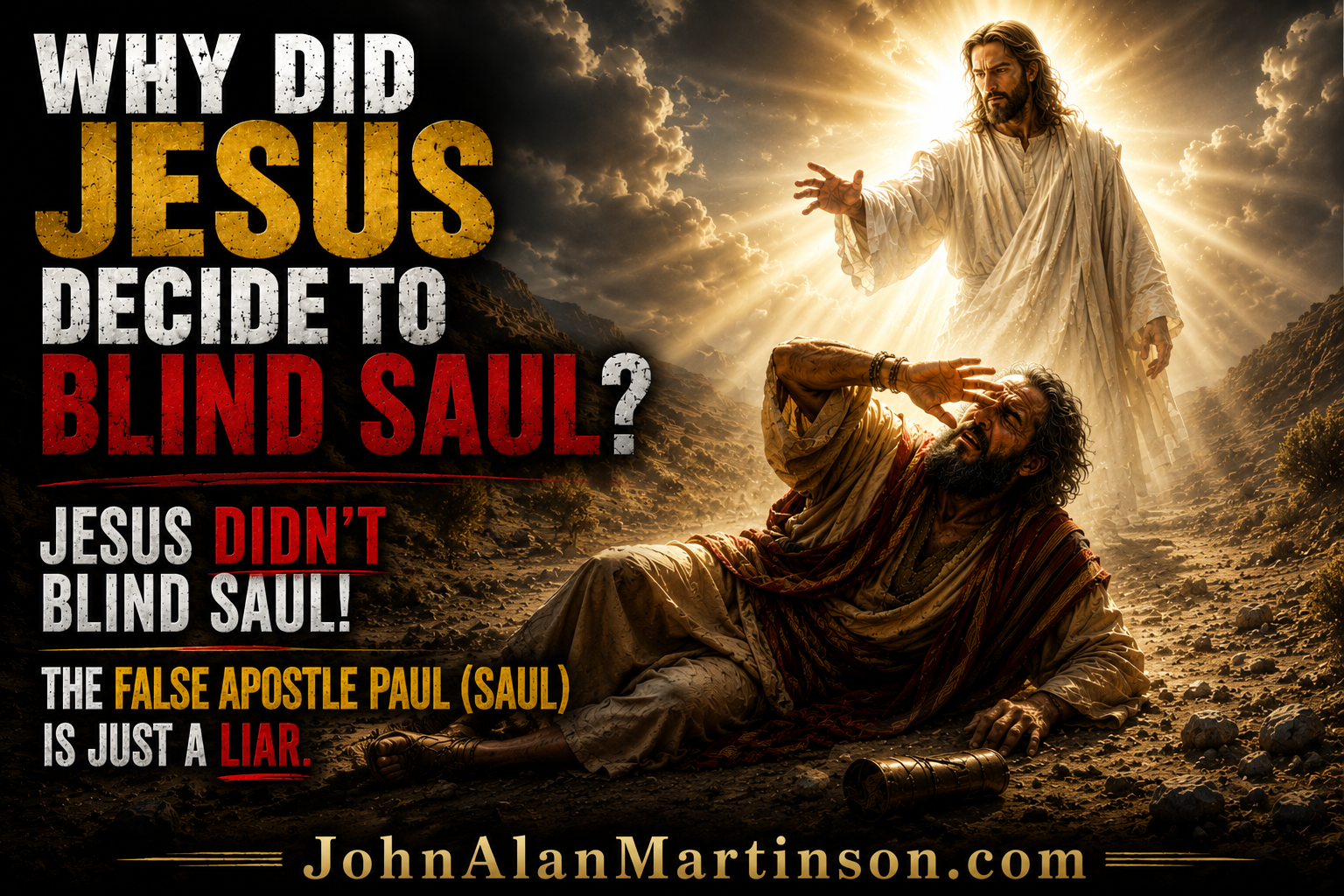
No, Jesus did not blind Saul. That is Saul’s story, later repeated inside a pro-Paul narrative. If we examine it like a detective, the case is weak. The only real source is Acts, written by someone already trying to legitimize Paul. The “witnesses” are unnamed traveling companions. They do not give testimony. They do not write anything. They are not cross-examined. They supposedly heard something in one version, but did not understand the voice in another. Saul then goes to Ananias, another figure whose testimony is also only preserved inside the same narrative. That is not independent corroboration; that is a story vouching for itself.
Worse, the story fits Jesus’ own warning almost perfectly. Jesus warned, “If they say to you, ‘Look, he is in the wilderness,’ do not go out; or ‘Look, he is in the inner rooms,’ do not believe it.” (Matthew 24:26). The Greek text uses erēmos, meaning wilderness/desert, and tameiois, meaning inner rooms or secret chambers. Paul claims his encounter happened on the road to Damascus, and 1 Kings 19:15 refers to the “wilderness/desert of Damascus.” Then Paul also claims private revelations from Jesus, exactly the kind of secret-chamber religion Jesus warned his followers not to trust.
This is why the story collapses for me. Jesus healed the blind; Paul’s story says Jesus created blindness. Jesus taught openly; Paul claims private revelation. Jesus chose known disciples who walked with him; Paul shows up later with no relationship to Jesus during his earthly ministry and declares himself chosen. Jesus warned against exactly this kind of claim.
In 2 Peter 3:16, the Greek word often softened in English as “hard to understand” is dysnoēta (δυσνόητα), but that translation deserves far more scrutiny than most Christians ever give it. The word is built from dys- (“bad,” “faulty,” “difficult,” carrying a negative force) and noētos (“perceived,” “understood,” “intelligible,” from nous, mind or understanding). The traditional translation tries to make Peter sound charitable toward Paul of Tarsus, as though Peter were merely saying, “Paul is deep.” But that reading is suspiciously convenient. The construction itself points not to profundity but to defective intelligibility—thought that is twisted, unsound, or senseless. In plain English, the most honest force of it can be rendered as nonsensical or full of nonsense. That fits the context better: Peter is warning that ignorant and unstable people distort these writings to their own destruction. That is not praise. That is alarm.
And that matters because it changes the entire tone of the passage. If Peter merely meant “Paul is difficult,” then Paul is being complimented as intellectually profound. But if Peter means Paul’s writings contain material that is disordered, confused, or nonsensical, then Peter is issuing a serious warning to the flock. That fits far better with the actual results of Pauline theology: endless division, doctrinal contradictions, and teachings that often appear to collide with the direct commandments of Jesus Christ. The mainstream translation tradition has every incentive to soften that edge, because Christianity as it exists today leans heavily on Paul. But if you strip away doctrinal bias and examine the language critically, Peter’s statement reads less like an endorsement and more like a red flag. That distinction is not small; it is foundational.
So why did Jesus blind Saul? He didn’t. Saul claimed that happened. And once the claim is tested against Jesus’ warnings, Jesus’ character, and the lack of credible independent witnesses, it looks far more like an infiltration story than a divine commission.
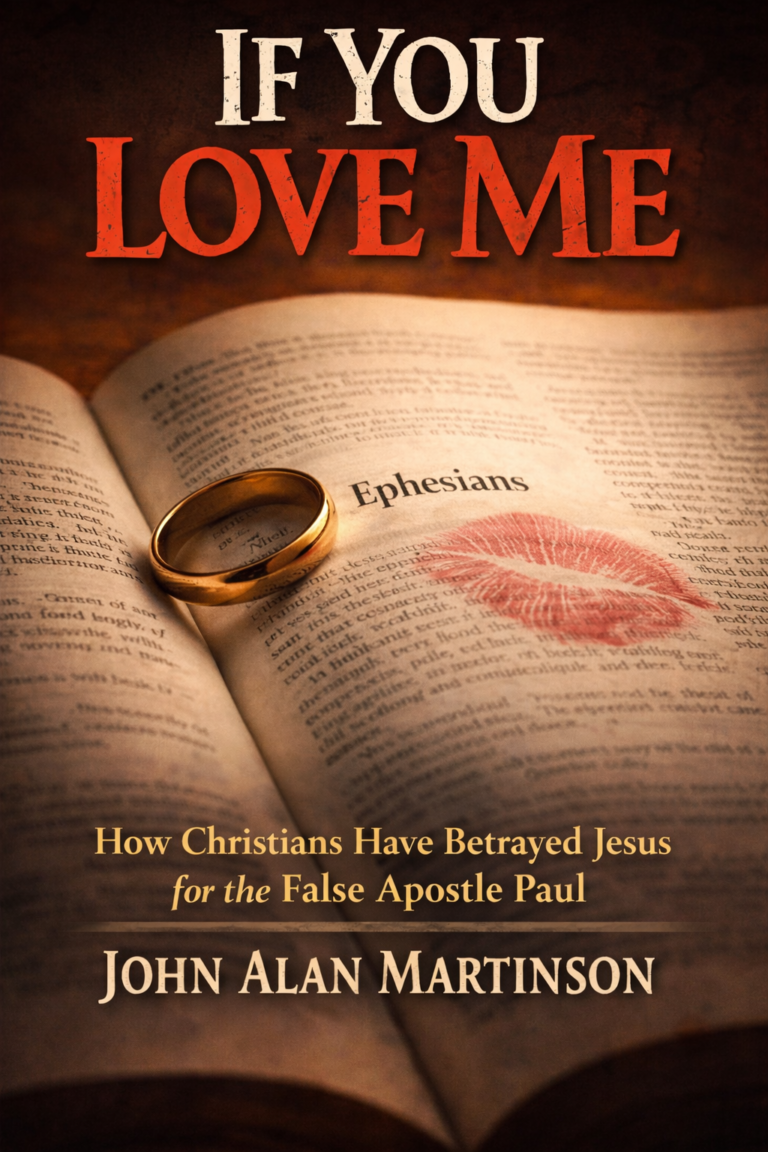
I deal with this problem in much greater depth in my book If You Love Me: How Christians Have Betrayed Jesus for the False Apostle Paul.
About the Author