INTRODUCTION
What Is Shadowrun JCd12?
Shadowrun JCd12 is a rules adaptation that shows how Jack’s Cinematic d12 (JCd12) is used to play Shadowrun. It exists because many Game Masters love Shadowrun’s world—especially the 1st and 2nd edition era—but are frustrated with its rules, complexity, and mechanical bloat, and end up running the game with homebrew systems anyway. Shadowrun JCd12 formalizes that common practice into a coherent, freely released ruleset that preserves the SR2 tone and setting while replacing the mechanics entirely. Nothing about this violates copyright: the setting and ideas remain Shadowrun’s, while all rules, resolution systems, and mechanics are original to JCd12.
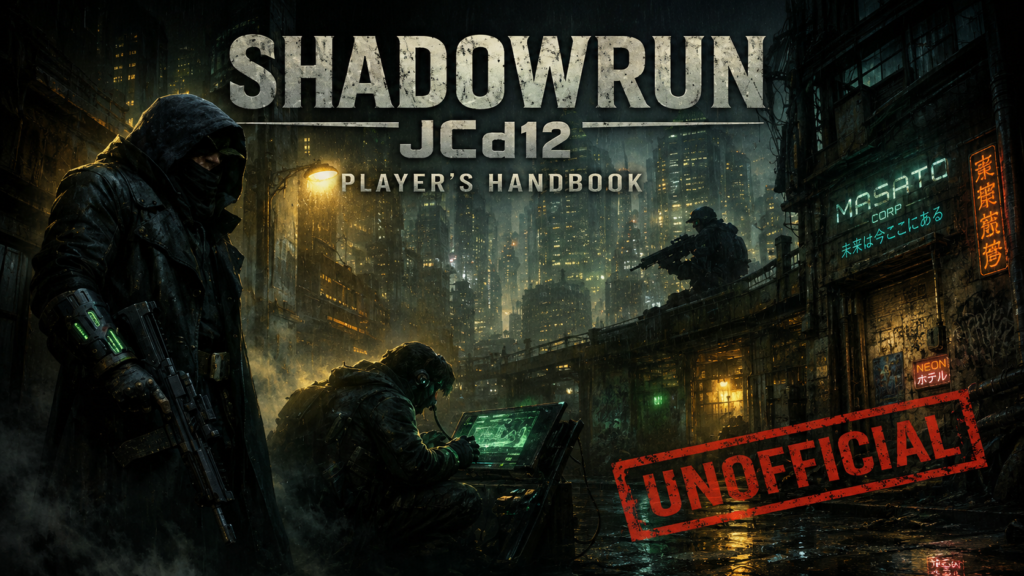
The tone of Shadowrun JCd12 is darker, grittier, and more unforgiving than mainstream Shadowrun. This is not a superhero cyberpunk game. It is a hard dystopia where sin, desperation, racism, exploitation, and moral decay are constant pressures. Orcs and trolls are often treated brutally by society, and that hatred is real—and tempting to participate in. Characters begin as nobodies with no reputation, no protection, and no safety net. Advancement is capped at five levels, which represent reputation and access, not power scaling.
Levels determine the kinds of missions characters are trusted with, replacing traditional reputation ratings. Money is tracked using realistic 2026 USD amounts, written with a dollar sign, though it is still referred to as “nuyen” in play for thematic consistency.
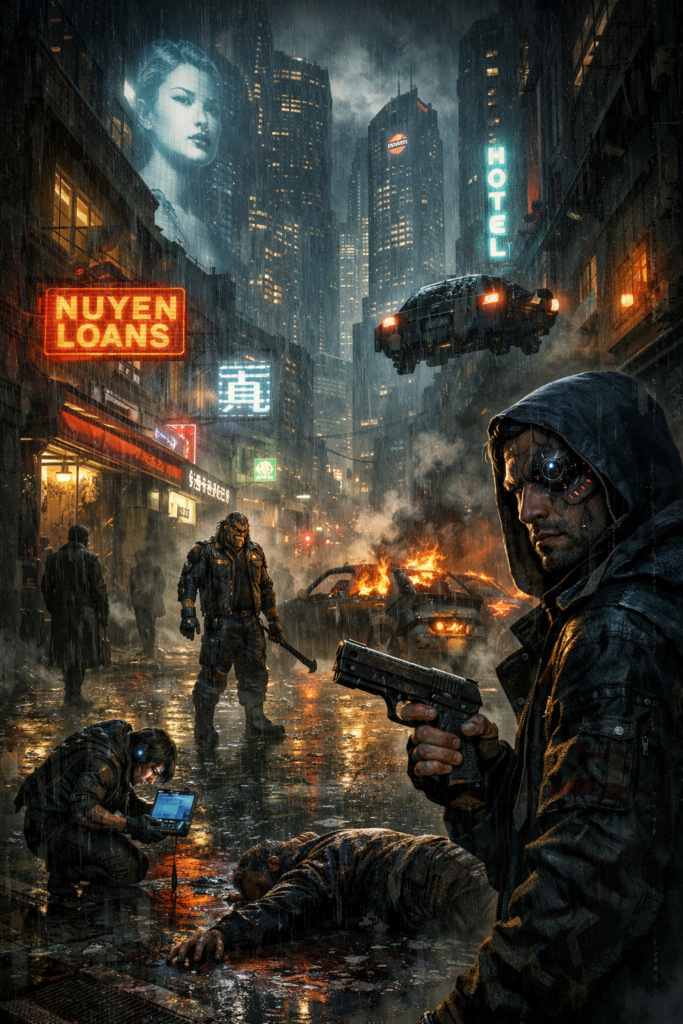
Shadowrun JCd12 emphasizes brutal realism and consequence. Combat is lethal. Recovery is slow. Magic exists but is dangerous and psychologically corrosive due to Consensus Reality, mental drain, and Gloom-based Temptation mechanics, which model the pull toward evil, corruption, and moral compromise.
The traditional Karma economy is replaced with JCd12’s Favor system. Spellcasting is vastly expanded—over 600 spells—but power always carries a cost. This version of Shadowrun is intentionally rated R: grime instead of gloss, horror instead of spectacle, and the reality of the underworld instead of a cartoon power fantasy.
The goal is not to feel like a cool underworld superhero—it is to survive long enough to matter.
About the Creator
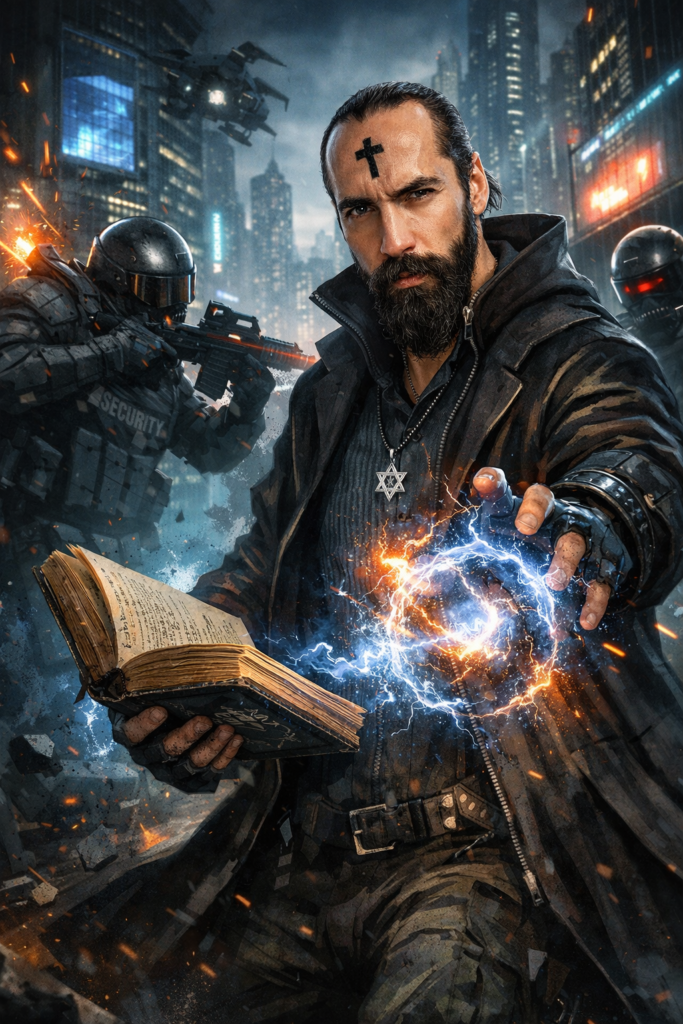
I began as a Shadowrun Game Master in the early 1990s. Like a lot of people from that era, I fell hard for the setting: the fusion of cyberpunk, magic, street crime, megacorporations, and myth was electric. Shadowrun had a soul. It still does. But even back then—and increasingly over the decades—I found myself fighting the rules more than running the game. Dice pools ballooned. Edge cases multiplied. Subsystems stacked on top of subsystems. Running the game became work instead of play. I didn’t stop loving the world. I stopped loving the machinery bolted to it. Jack’s Cinematic d12 (JCd12)—my universal tabletop role-playing game ruleset exists because I wanted a rules engine that was cinematic, fast, lethal, and consistent—one that respected the intelligence of the GM and the time of the players. When I realized how easily Shadowrun’s themes and situations mapped onto JCd12, the conclusion was obvious: these rules could replace the existing mechanics entirely while leaving the setting intact. That is exactly what this book does. Let me be very clear about intent. I am not trying to steal Shadowrun. I am not trying to supplant it. I am not trying to profit from it. This book is released for free, deliberately and permanently. It exists because I believe Shadowrun deserves better rules, and because I believe more people would play in that world if the barrier to entry weren’t so high. Far from harming Catalyst, this book increases the value of their product line. The more accessible the game becomes, the more people will buy official Shadowrun books, sourcebooks, miniatures, art, and fiction. A rules engine does not replace a world. Worlds are why people play. Systems are just the tools. If more tables are running Shadowrun—using my rules or anyone else’s—that is a net gain for the brand.
⚠️This book is also intentionally incomplete. It excludes the Shadowrun timeline, metaplot, factions, locations, characters, and narrative history. It does not reproduce equipment lists or item descriptions. Instead, it explains how to convert ratings, availability, and nuyen costs into JCd12 terms. It does not include Shadowrun spells; it replaces the magic system entirely. It does not republish Matrix rules or vehicle combat; those are fully reimagined. Without an official Shadowrun rulebook or sourcebook, you cannot run an authentic Shadowrun game session using this rulebook alone. That is by design. This book assumes—and requires—that GMs own the official material.
In other words, this is not a substitute for Shadowrun books. It is a lens through which to use them.I reject the idea that this constitutes copyright violation. No copyrighted text is reproduced. No proprietary lore is summarized. No setting content is copied. What I provide is an alternative mechanical framework and a conversion methodology. If a company believes that threatens their profits, the solution is not legal intimidation—it’s better design. Fix the rules. Make them playable. Make people excited to sit at the table again. I’m also not interested in entertaining corporate posturing or legal bullying. If a company wants to act like one of the evil megacorporations in its own fiction, that’s a choice—but it’s not one I’m going to quietly respect.
What Gameplay Should Feel Like?
Playing Shadowrun JCd12 should feel like stepping into a decaying city at 3:17 a.m.—neon bleeding into rain-soaked concrete, failing infrastructure humming in the background, and the quiet menace of a world that no longer cares who lives or dies. The goal is not to wrestle with subsystems or edge cases, but to inhabit a brutal dystopia where every choice matters. Shadowrun JCd12 favors consequence over optimization—decisions, not math puzzles. The rules exist to sharpen the moment, not slow it down, and players are expected to act under pressure rather than freeze in search of perfect outcomes.
The Game Master serves as narrator and world-builder, describing not just what happens, but how it feels. A back-alley clinic smells of antiseptic and fear; a corporate lobby is sterile, overlit, and hostile; a gang-controlled street hums with tension even when nothing is happening. Players respond with tone as much as action: the runner who draws a gun because he’s scared, not brave; the decker who hesitates before opening a file that will ruin someone’s life; the medic who saves an enemy because letting them die would be easier.
The world of Shadowrun JCd12 exists in constant tension between Consensus Reality and 🕷️the Gloom. Consensus Reality is the fragile agreement that keeps the modern world functioning—the belief that systems work, laws matter, and tomorrow will resemble today. Magic, violence, and extreme acts strain that agreement. When Consensus weakens, cracks appear: coincidences pile up, surveillance fails at the wrong moment, and the impossible begins to feel plausible. Characters feel this pressure mentally before it ever becomes visible.
The Gloom, by contrast, is a corrosive force born of cruelty, hatred, exploitation, and sin. It feeds on moral compromise and thrives where people stop caring. It tempts constantly—offering power, money, safety, or revenge at the cost of tainting the soul. As the Gloom takes hold, the world grows heavier. Lights flicker. Sounds distort. Violence feels easier. Mercy feels foolish.
Game Masters are encouraged to ground every session in the grime of a late-stage corporate dystopia: debt culture, corporate immunity, privatized violence, and quiet despair. Draw inspiration from 1980s and early 1990s cyberpunk—a future that feels cold, cheap, and broken rather than sleek or heroic. Shadowrun JCd12 leans into ugliness and discomfort, not spectacle.
Combat should be fast, frightening, and final. Gunfights are loud, messy, and brief. People bleed out. Bystanders get hurt. Retreat is often the smartest option. Every roll should feel like a risk, not a routine. Horror here is not gore—it is recognition. The realization that the world is rotting because people keep choosing convenience over conscience. Let temptation do more damage than monsters. One bad decision should echo longer than a dozen bullets.
At its core, Shadowrun JCd12 is about reputation, survival, and moral erosion in a world that rewards the worst impulses and punishes restraint. It is not a power fantasy, but a slow descent into a future that feels entirely plausible—and deeply wrong.
What are the differences?
- d12-based resolution instead of Shadowrun’s d6 dice pools.
- Five Action Star Levels replace reputation ratings and Karma-based advancement, and directly determine what kinds of missions a character is even eligible for.
- 🧠Mental Trauma and 🩸Physical Wound trauma charts replace Condition Monitors, Stun damage, and Physical damage tracks. Damage is qualitative as well as quantitative, emphasizing injury, shock, panic, hesitation, and long-term consequences rather than abstract boxes.
- Favor replaces Karma. Advancement and survival are driven by obligations, debts, leverage, and relationships within the underworld—not abstract moral or experience currency.
- Spellcasting requires overcoming Consensus Reality. Magic is resisted by reality itself, creating mental strain, instability, and risk even when spells succeed. Standard Shadowrun features “drain” from spells as well, but the reasoning is distinct.
- Locations have Domain Ratings instead of being spiritually neutral by default. Domains are rated as Normal (0), 🕷️Gloom (+1 Cursed, +2 Desecrated, +3 Abysmal), or 🌿Tranquility (–1 Blessed, –2 Sacred, –3 Edenic), and these ratings actively shape what can happen there.
- Fantasy creatures are bound to Domains, not freely roaming the setting. They appear only where spiritual conditions support them—sometimes limited to a single building, room, alley, or section of forest—rather than existing everywhere at all times.
- Fantasy creatures are publicly known to exist, as in standard Shadowrun, but in Shadowrun JCd12 they manifest only when a location’s spiritual conditions allow it. Sightings are conditional, localized, and often temporary.
- Orks and Trolls are more susceptible to 🕷️Gloom 🐍Temptation, and racism against them exists as a real social pressure with uncomfortable, sometimes seemingly “practical” justifications. Hatred is framed as tempting, corrosive, and spiritually dangerous.
- The criminal underworld is portrayed with brutal realism, emphasizing exploitation, betrayal, paranoia, cruelty, and moral decay, rather than the more PG-13, stylish, or superheroic tone often found in standard Shadowrun.
- Matrix rules are intentionally simplified, focusing on narrative impact, access, risk, and consequences rather than deep subsystems that stall play.
- Over 600 spells replace Shadowrun’s more limited spell lists, but with far higher psychological, moral, and spiritual cost attached to magic use.
- 12 Attributes, and 24 broad skills connected to 5 Attributes PRISMs (groups of attributes) mean that each skill is more logically drawing from several Attributes that are actually required to perform the action.
- Favor replaces Karma. Favor is a cinematic providence mechanic, not a moral score or obligation tracker. It is earned through meaningful play, accomplishment, survival, and decisive action, and is spent to reroll dice or add +1 per point to a roll. Favor represents momentum, fate, and narrative pressure—not experience points and not social debts.
- Heavy focus on mental toll and moral erosion, rather than treating shadowrunning primarily as a tactical or economic exercise. Fear, guilt, hatred, temptation, and burnout are first-class mechanics.
- All prices use realistic 2026 USD amounts, written with the dollar sign, while still being referred to as nuyen in play for thematic consistency—anchoring the economy in modern reality rather than abstract future inflation.
Learn about Attributes next.