How One Cyberpunk RPG Treated Prejudice More Honestly Than Modern Fantasy
The average reader can read this 15,000-word essay in 1.5 hours.
Introduction
Every few years the tabletop role-playing game industry discovers a new moral crusade. One decade it is Satanic Panic. The next it is moral panic over violence. Then it becomes inclusivity statements, diversity initiatives, cultural consultants, sensitivity readers, revised terminology, and endless debates over whether fantasy creatures are problematic. Each new controversy is presented as though the hobby has finally reached a level of moral enlightenment that previous generations lacked.
If you only began following tabletop role-playing games recently, you might assume that the industry has only now begun asking serious questions about racism, prejudice, discrimination, and representation.
That assumption would be completely wrong.
One of the most sophisticated explorations of prejudice in tabletop gaming was published in 1989.
- It wasn’t written by a committee of corporate diversity consultants.
- It wasn’t produced after months of social-media activism.
- It wasn’t the result of a marketing department trying to improve a company’s public image.
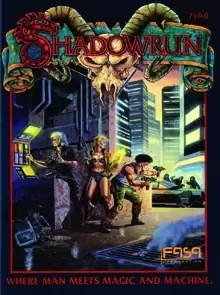
It was Shadowrun.
Nearly four decades later, I believe Shadowrun still handles these subjects more intelligently than many modern games—including today’s Dungeons & Dragons.
That is a bold claim, and one that deserves careful explanation.
This essay is not an attempt to argue that Shadowrun is morally perfect. It isn’t. Nor is it an argument that every fantasy setting should imitate Shadowrun’s approach. Different fictional worlds require different assumptions, different histories, and different philosophies. Tolkien‘s Middle-earth is not the Sixth World. Robert E. Howard’s Hyborian Age in the fiction of Conan the Barbarian is not Warhammer Fantasy. There is room within fantasy literature and tabletop gaming for radically different visions of morality, culture, and conflict.
My argument is something much narrower—and, I believe, much stronger.
Shadowrun understood that prejudice is complicated.
It understood that injustice can exist without reducing every member of an oppressed group to a saint. It understood that biological differences need not determine moral worth. It understood that societies discriminate, corporations exploit, politicians manipulate fear, the media shapes public opinion, and ordinary people are capable of both extraordinary compassion and astonishing cruelty.
Most importantly, Shadowrun understood that individuals remain individuals. That lesson feels strangely absent from much of today’s corporate storytelling.
Before anyone mistakes this essay for another culture-war rant, let me explain where I’m coming from.
I did not learn about racism from a university classroom, a corporate seminar, or a political movement. I learned about it the old-fashioned way: by experiencing it.
I am mixed-race. Older generations commonly used the word mulatto, while today most people simply say mixed-race. Whatever label someone prefers, the practical reality is the same. Throughout my life, I have occupied an awkward space between racial categories that many people seem determined to preserve.
As a child, I experienced racism from black kids in a neighborhood that was predominantly black because my skin was considered too light. That experience did not convince me that black people are uniquely racist. It convinced me that racism is not magically confined to one complexion.
Years later, I spent time around white nationalists. I wanted to understand how they thought rather than merely caricature them from a distance. Some of them appreciated my writing. Some complimented my ideas. Then, often without any apparent awareness of the contradiction, they would begin talking about how race mixing was destroying civilization. They would say these things directly to me—a mixed-race man—as though my own existence were merely an inconvenient exception to their ideology. The proud racist, Michael Delaney (also known as “Prothink”), even said that I did not belong in the United States because “the USA belongs to white people”—and he said that after I had assisted him greatly in completing a documentary that he would have never completed, had I not done 90% of the work.
Such experiences permanently changed how I think about prejudice.
The modern American political conversation often encourages us to imagine racism as though it belongs exclusively to one tribe. Depending on whom you ask, racism is either primarily the domain of white conservatives or primarily the result of progressive identity politics. Each side points to the other while ignoring its own failures.
My own life has made that explanation impossible to accept.
Human beings are capable of prejudice.
- Sometimes that prejudice is reinforced by institutions.
- Sometimes it is reinforced by culture.
- Sometimes it is reinforced by ideology.
- Sometimes it is reinforced by fear.
- Sometimes it is reinforced by tribal loyalty.
No political movement has a monopoly on it. Likewise, no political movement has a monopoly on opposing it.
That perspective matters because discussions about fantasy races—or “species,” if one prefers Wizards of the Coast’s newer terminology—often collapse into simplistic narratives. Entire games are praised or condemned according to whether they appear to reinforce or reject modern political assumptions.
I find that approach deeply unsatisfying.
Fantasy is not sociology. Nor should it become sociology wearing a dragon costume. Fantasy exists to explore ideas that reality often makes difficult to examine directly. Myth, legend, science fiction, horror, and fantasy all allow us to investigate questions about humanity from unexpected angles. The greatest speculative fiction does not merely preach conclusions. It creates worlds complicated enough that readers and players must wrestle with difficult questions for themselves.
Shadowrun excels at exactly that. Ironically, it accomplishes this by refusing to simplify prejudice.
Instead of pretending that racism disappeared in the future, it imagines what prejudice might look like after the return of magic, the emergence of dragons, the rise of megacorporations, the birth of entirely new metahuman peoples (i.e., human sub-species), and the collapse of traditional political structures. Human beings remain recognizably human. They form communities. They discriminate. They organize politically. They exploit crises. They commit atrocities. They also build friendships across cultural lines, fall in love with people unlike themselves, defend neighbors who are different, and reject the tribalism surrounding them. The result is neither utopian nor nihilistic.
It feels plausible. That plausibility is one reason Shadowrun has endured.
This essay is not intended to attack people who enjoy modern Dungeons & Dragons. Millions of players continue to find joy around D&D tables every week, and there is nothing inherently wrong with preferring a different style of fantasy. Nor is this essay an argument against diversity itself. Tabletop gaming has always benefited from welcoming new players, new designers, and new perspectives. Creativity flourishes when more people contribute to it.
The issue is not diversity. The issue is what happens when diversity becomes ideology.
There is an enormous difference between creating compelling characters from many different backgrounds and treating demographic representation as a moral accounting exercise. There is an enormous difference between expanding a fictional world and redesigning that world primarily to satisfy contemporary political expectations. There is an enormous difference between encouraging creativity and requiring ideological conformity.
Those distinctions have become increasingly blurred within parts of the modern tabletop industry.
Wizards of the Coast has publicly explained many of the design decisions that have reshaped recent editions of Dungeons & Dragons. Some players applaud those decisions. Others believe they have weakened the game’s world-building. The debate has become one of the defining controversies in contemporary tabletop gaming.
Rather than shouting slogans from either side, I want to ask a different question: what if another role-playing game solved many of these problems decades ago?
What if the best example of handling prejudice in fantasy was not a recent corporate initiative but a cyberpunk fantasy game first published when Ronald Reagan was still President of the United States?
That possibility deserves serious consideration. It also deserves historical context.
Many younger players know Shadowrun only by reputation. Others know it primarily through later editions without understanding the creative environment from which it emerged. To appreciate why Shadowrun’s treatment of prejudice was so unusual, we first need to understand the fantasy traditions it inherited and the assumptions it challenged. Only then can we appreciate just how far ahead of its time Shadowrun really was.
Before Shadowrun
Long before fantasy writers invented elaborate histories for elves, dwarves, orcs, and other imagined peoples, human cultures populated the edges of the known world with monsters. These beings waited beyond the village, beneath the earth, across the sea, inside the forest, or at the gates of the underworld. Some embodied chaos; others represented divine punishment, uncontrolled appetite, death, disease, forbidden knowledge, or the danger of leaving civilization behind. The monster was often something outside the recognized human community, yet close enough to humanity to disturb it. It might speak, bargain, deceive, reproduce, rule, worship, or imitate civilized behavior. Monsters helped communities imagine what they feared, but they also helped those communities define what they believed themselves to be.
It would be a mistake, however, to reduce every mythological monster to a disguised racial stereotype. The ancient imagination was more complicated than that. A dragon could represent greed, destruction, kingship, nature, wisdom, or sacred power depending upon the culture and the story. A giant might be an enemy of the gods, an ancestor, a remnant of an older world, or simply a creature of overwhelming size. Demons were not foreign nations with unusual customs; they were spiritual adversaries. The dead were not an oppressed ethnic group. Many monsters existed precisely because they violated ordinary categories. They were human and animal, living and dead, beautiful and horrifying, rational and bestial, familiar and alien at the same time. Their moral role arose from myth, religion, fear, and symbolism—not from a modern theory of race.
Modern fantasy inherited this enormous symbolic vocabulary. What changed was that its creators began organizing the old creatures into increasingly detailed secondary worlds. Monsters acquired languages, migrations, dynasties, ancestral grievances, religions, technologies, and political interests. They ceased to be isolated marvels encountered at the edge of a story and became populations inhabiting the same world as the heroes. Once that happened, fantasy inherited a difficult moral question: when does a monster stop being a monster and become a person?
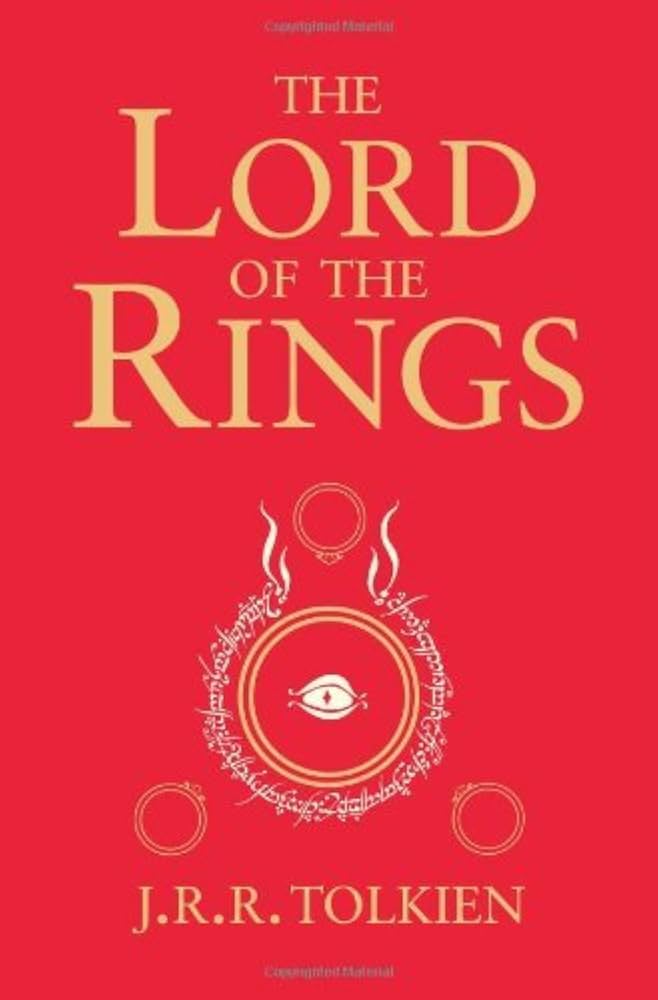
No writer did more to transform the inherited beings of European mythology into peoples with coherent histories than J. R. R. Tolkien. Tolkien did not simply borrow elves and dwarves and place them inside an adventure. He reconstructed them through philology, invented languages for them, situated them within a vast chronology, and gave their cultures memories extending across ages. His imagination drew upon Germanic and Norse traditions, Finnish mythology, medieval literature, Christianity, and his own linguistic inventions. The result was not a random collection of legendary creatures but a world in which languages, peoples, landscapes, and histories appeared to have developed together.
Tolkien’s influence upon modern fantasy is so extensive that it is sometimes difficult to see how unusual his achievement once was. Elves became not merely supernatural fairies but an ancient people burdened by memory, artistic achievement, pride, grief, and decline. Dwarves became a dispersed civilization with their own language, craftsmanship, religious identity, ancestral homes, and inherited injuries. Even the enemies of Middle-earth were woven into a metaphysical history. Evil did not create in the same manner as God; it corrupted, mutilated, imitated, and enslaved.
That principle created a lasting problem concerning the orcs. Tolkien’s orcs are cruel, violent, resentful, and deeply corrupted, but they are also rational enough to speak, organize, quarrel, fear punishment, recognize injustice, and imagine lives outside immediate servitude. Tolkien understood the theological difficulty. In his published correspondence, he resisted the idea that any rational incarnate being could be declared absolutely and permanently beyond redemption. He described orcs as beings that had been horribly corrupted, while stopping short of treating their damnation as metaphysically certain. Evil could deform life, but it could not independently create souls merely for slaughter.
Tolkien never produced a perfectly settled answer to the origin or moral status of orcs. Different writings suggest different possibilities, and the tension remains unresolved. That matters because later fantasy often inherited the outward form of Tolkien’s peoples without inheriting the full moral and theological anxiety behind them. The orc became a standard enemy, while the troubling question—whether a speaking, reasoning, social being could be born deserving extermination—was frequently ignored.
Tolkien’s world nevertheless operated within a recognizable mythic structure. There were powers aligned with creation and preservation, and powers committed to domination and corruption. His central war was not a modern conflict among morally equivalent nation-states. It was a struggle against a Dark Lord seeking to enslave the world. Tolkien’s Orcs therefore functioned as soldiers within a mythological war, not simply as an ethnic minority inhabiting a contemporary society. Applying modern racial categories to them without qualification can be as misleading as pretending that their intelligence raises no moral questions at all.
Robert E. Howard approached fantasy through a very different conception of history. Conan first appeared in Weird Tales in 1932, and Howard devised the Hyborian Age as a fictional prehistoric era that would allow him to move among recognizable analogues of ancient and medieval societies without being confined by exact historical events. Howard explained that the framework helped him maintain consistency while preserving the freedom required for adventure fiction. His world was crowded with kingdoms, tribes, empires, pirates, merchants, sorcerers, slaves, soldiers, and forgotten civilizations rising and falling in recurring cycles.
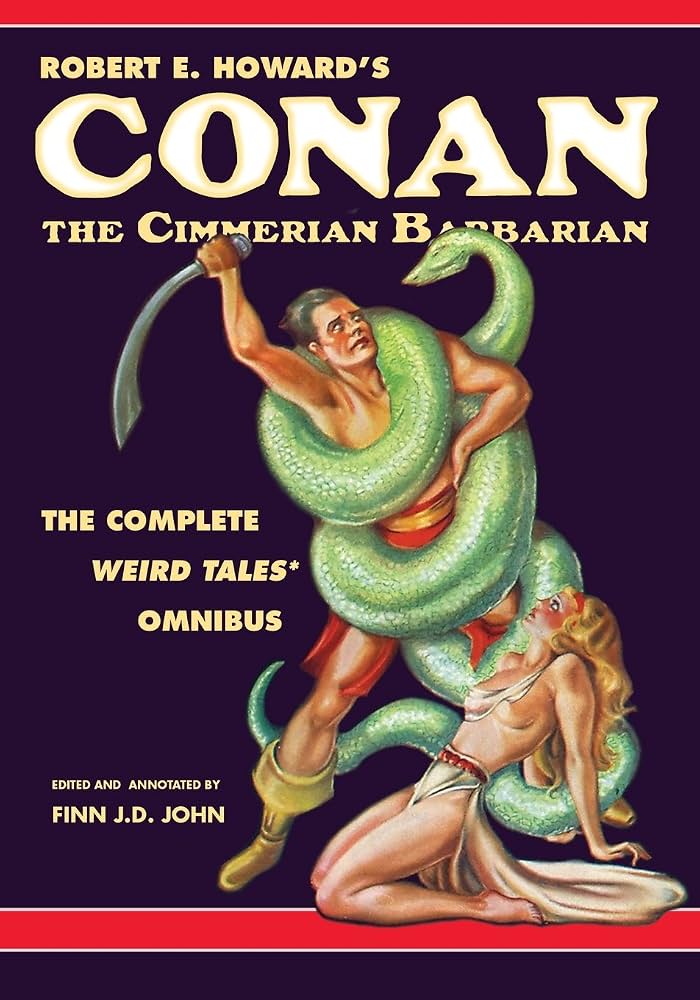
In Tolkien, civilization could preserve ancient wisdom against encroaching darkness. In Howard, civilization was often the darkness with better architecture. Kings were treacherous, priests manipulative, merchants predatory, and empires decadent. Conan was no gentle moral philosopher; he was violent, ambitious, lustful, opportunistic, and capable of becoming a conqueror himself. Yet Howard repeatedly contrasted his directness, courage, vitality, and personal loyalties with the concealed corruption of supposedly refined societies.
Howard did not simply declare barbarism innocent and civilization evil. Barbarian societies could be brutal, superstitious, and merciless. His larger point was that civilization did not abolish savagery. It disguised, organized, and frequently magnified it. The silken courtier might be more treacherous than the tattooed raider. The respectable ruler might inflict suffering on a scale unavailable to a common thief. Civilizations became powerful, softened, decayed, and were eventually replaced by peoples who would repeat the cycle. Howard’s fictional ethnography also reflects racial theories, stereotypes, and assumptions common to his era, and those elements should not be denied. Yet his world did not present civilized nations as automatically virtuous or outsiders as automatically depraved. Human societies were judged repeatedly by what they did, not merely by what they called themselves.
Michael Moorcock would later turn fantasy’s inherited assumptions against themselves. Moorcock’s Elric was almost an inversion of Conan: a physically frail, highly educated emperor dependent upon drugs and eventually upon a supernatural sword that consumed souls. He was heir to Melniboné, an ancient and sophisticated empire whose artistic refinement existed alongside slavery, cruelty, decadence, and contempt for younger peoples. Civilization in the Elric stories was not merely compromised. It could be magnificent and monstrous at the same time.
Moorcock was also an editor and polemicist who opposed what he regarded as the comforting conservatism of much popular fantasy. As editor of New Worlds, he became a significant figure in the British New Wave, encouraging speculative fiction that was more experimental, psychologically unstable, politically uneasy, and openly suspicious of established institutions. In his 1978 essay “Epic Pooh,” Moorcock attacked Tolkien, C. S. Lewis, and other writers for what he considered nostalgic, consoling, and politically conservative fantasy. His argument was influential, provocative, and frequently criticized in return.
Whether Moorcock judged Tolkien fairly is not the important issue here. The important point is that fantasy had already become a field of competing moral and political philosophies. Tolkien, Howard, and Moorcock were not offering interchangeable collections of swords, monsters, and ruined castles. They disagreed about civilization, authority, heroism, corruption, nostalgia, violence, and the nature of evil. Long before corporate publishers began issuing formal statements about representation, fantasy writers were already arguing through their fiction about what kinds of societies deserve preservation and what kinds of heroes deserve admiration.
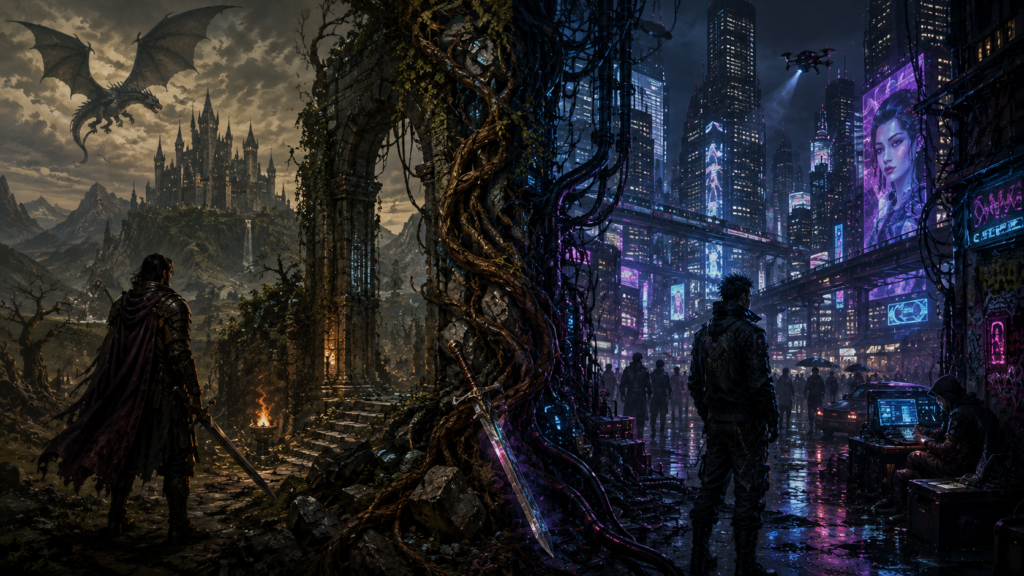
When Dungeons & Dragons appeared in 1974, it converted this enormous literary inheritance into a playable form. Gary Gygax and Dave Arneson drew upon miniature wargaming, pulp fiction, mythology, medieval romance, horror, sword-and-sorcery, Tolkienian fantasy, and numerous other influences. The critical innovation was not merely that players could read about fantastic heroes. They could control individual adventurers, make decisions, explore dangerous places, and produce stories whose outcomes were not predetermined. Wizards of the Coast’s own history describes the original game as the birth of tabletop role-playing, emphasizing its open-ended worldbuilding, collaborative storytelling, and dice-driven adventure.
Turning literature into a game, however, required compression. A novelist could spend chapters complicating a creature’s motives. A game designer had limited space and needed to tell the referee how many creatures might appear, what they could do, what treasures they possessed, whether they were likely to attack, and how dangerous they were. Mythological and literary beings became entries with armor class, hit dice, movement rates, attacks, morale, alignment, and frequency. The uncertainties of fiction became procedures for play.
This was not necessarily a political declaration. It was practical game design. If adventurers entered a dungeon, the referee needed usable information immediately. The game was built around exploration, danger, combat, negotiation, and survival. Clear categories helped the referee make decisions quickly, while alignment provided a rough model of cosmic allegiance and behavioral tendency.
Yet the process created a moral complication. There is a substantial difference between an evil creature and an evil people. A demon may be an intelligence constituted by rebellion against divine order. An undead horror may exist through the violation of life and death. A supernatural predator may possess reason only as an instrument for cruelty. Such beings do not necessarily represent ordinary biological populations.
A speaking, reproducing, tool-using society is different. Once its members have children, homes, customs, rival factions, religious beliefs, economic needs, friendships, internal disputes, and the ability to reconsider their actions, they begin to resemble a civilization. The more fully imagined they become, the harder it is to treat every individual as morally interchangeable. A village of reasoning beings cannot be approached in precisely the same way as a nest of giant spiders without raising questions that the game may not have intended to ask.
Early Dungeons & Dragons often left those questions to individual referees. Some campaigns treated 0rcs and similar beings as servants of supernatural evil. Others portrayed them as hostile tribes, military enemies, or competing civilizations. Still others questioned the assumptions built into standard encounters. The openness of role-playing meant that the published category never entirely controlled what happened at the table. Players could negotiate with enemies, adopt outsiders, betray supposedly civilized patrons, or discover that the creatures described as monsters had their own account of history.
Warhammer took the moral corruption of civilization considerably further. Games Workshop began in 1975 as a British mail-order company importing fantasy role-playing games and board games. White Dwarf followed in 1977, Citadel Miniatures developed soon afterward, and the first edition of Warhammer appeared in 1983, combining principles of historical miniature warfare with mythic fantasy.
The Warhammer world retained recognizable fantasy peoples and monstrous enemies, but it was far less interested in presenting civilization as clean, stable, or morally authoritative. Human states were fanatical, corrupt, diseased, superstitious, politically fragmented, and repeatedly infiltrated by the forces they claimed to oppose. Elves were brilliant but proud, divided, and capable of cruelty. Dwarfs possessed courage, loyalty, craftsmanship, and a nearly pathological commitment to inherited grievances. Orcs remained destructive enemies, but the civilized factions were scarcely innocent.
Chaos made the setting’s moral structure especially revealing. It was a supernatural force, but it did not operate only as an invading army from elsewhere. It tempted mortals through ambitions, appetites, resentments, desires, fears, and weaknesses that already existed within them. Civilization could therefore become monstrous from the inside. Institutions did not merely protect people from corruption; they could conceal it, serve it, or reproduce their own forms of brutality.
Warhammer’s black humor and grotesque exaggeration allowed it to mock the pretensions of nearly every faction. The monster was no longer confined beyond civilization’s walls. The tax collector, inquisitor, nobleman, physician, priest, merchant, and magistrate could all participate in systems as horrifying as anything in the wilderness. By the end of the 1980s, fantasy gaming had become fully capable of portraying institutions themselves as monsters.
At almost the same time, cyberpunk was developing a new language for institutional power. The word was coined by Bruce Bethke in a story published in 1983 and was then adopted by editor Gardner Dozois as a label for an emerging movement. Writers including William Gibson, Bruce Sterling, Rudy Rucker, Lewis Shiner, and John Shirley imagined high-technology futures inhabited not primarily by triumphant scientists and explorers but by hackers, criminals, mercenaries, addicts, artificial intelligences, corporate employees, and alienated urban survivors. Gibson’s Neuromancer, published in 1984, became the defining novel of the movement.
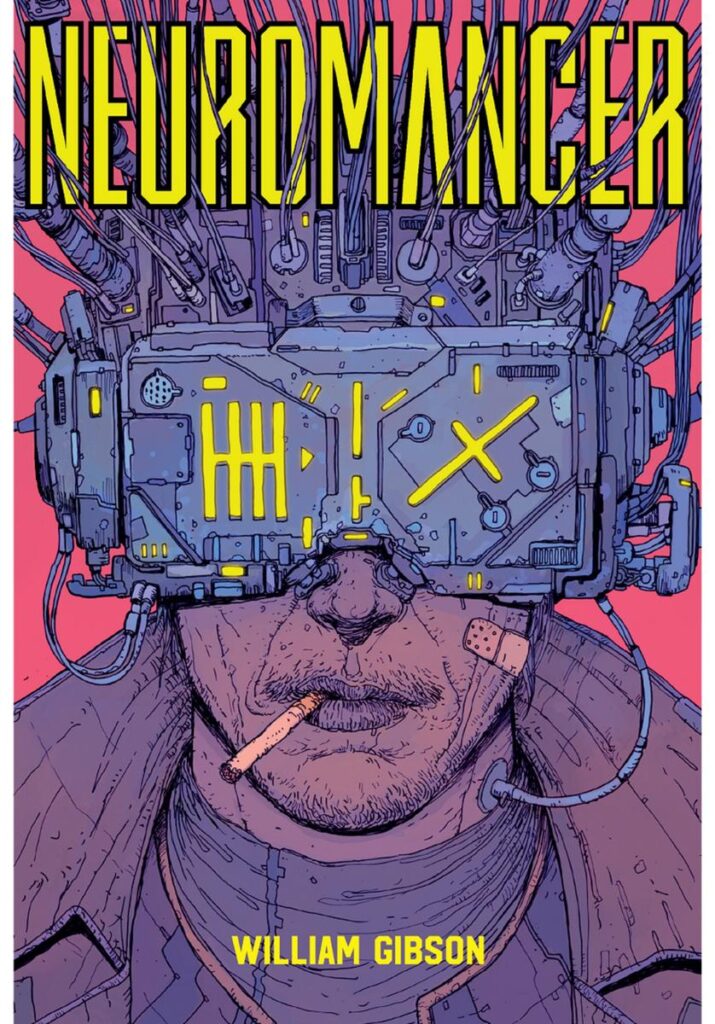
Cyberpunk was never merely an aesthetic of neon lights, mirrorshades, black leather, and chrome limbs. Its central subject was power. It imagined that technological development would not necessarily distribute freedom or prosperity equally. Computers might connect the world while making surveillance nearly inescapable. Cybernetic enhancement might expand human ability while turning the body into purchased equipment. Biotechnology might conquer disease while allowing corporations to patent, redesign, and own aspects of life. Governments might weaken while multinational corporations acquired private armies, intelligence networks, extraterritorial territory, and influence beyond democratic control.
The genre’s protagonists were often people living beneath these systems. They did not command the future; they survived inside it. They knew how to exploit its machinery without possessing it. The punk in cyberpunk mattered because these characters were alienated from respectable authority. They occupied streets, slums, criminal networks, temporary jobs, virtual spaces, and unstable identities. Technology was intimate, invasive, liberating, addictive, and dehumanizing at once.
Fantasy had spent decades asking what separated human beings from monsters. Cyberpunk asked: what happens when institutions treat human beings as products?
Shadowrun was born at the point where those questions collided.
FASA Corporation had been founded in 1980 by Jordan Weisman and L. Ross Babcock. The company first published licensed material for Traveller and later became known for major gaming properties including BattleTech. In 1989, it released Shadowrun, a role-playing game that united cyberpunk dystopia with the return of magic, dragons, elves, dwarfs, orcs, trolls, shamans, spirits, and ancient powers.
The combination could easily have become a novelty: fantasy characters with automatic weapons, wizards beside computer hackers, dragons in boardrooms, and elves with cybernetic implants. What made Shadowrun endure was that the fusion reached far deeper than its imagery. Weisman has described the setting’s central contrast as the collision between a plausible cyberpunk descent into corporate dystopia and nature’s return through magic. The fantasy elements were not pasted onto the future. Their return disrupted history and transformed the meaning of that future.
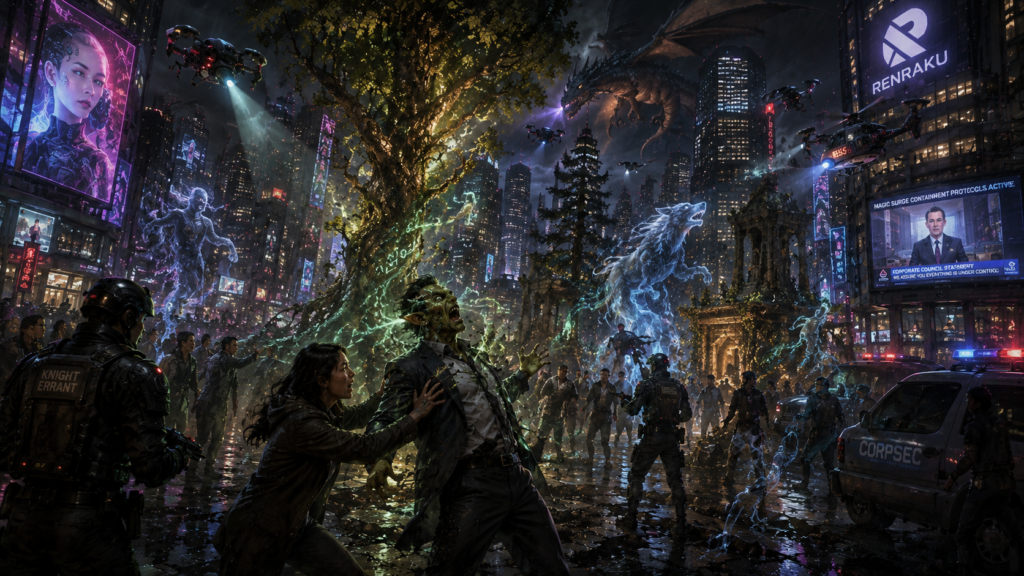
Magic changed geography, religion, warfare, medicine, politics, and national identity. Dragons did not merely guard treasure; they accumulated corporate and political influence. Elves and dwarfs did not live safely in remote mythological kingdoms; they were born into modern families, entered schools, held jobs, inherited wealth, suffered discrimination, and participated in mass society. Orcs and trolls did not wait inside dungeons for adventurers to arrive. They appeared amid cities already divided by race, class, policing, nationalism, poverty, and corporate power.
Shadowrun was therefore neither Dungeons & Dragons with guns nor conventional cyberpunk decorated with elves. It inherited fantasy’s ancient peoples, monstrous transformations, magical corruption, ancestral grievances, and questions about civilization. It inherited cyberpunk’s megacorporations, privatized violence, technological inequality, surveillance, urban dispossession, bodily modification, and disposable underclass. Then it forced those inheritances to occupy the same streets.
The old fantasy question had been, “What is a monster?” Shadowrun asked who gets to answer that question, who profits from the answer, and what happens when the answer determines where someone may live, whether someone can find employment, how the media describes them, and whether the police regard them as a citizen or a threat.
That is the foundation upon which Shadowrun built one of the most compelling treatments of prejudice in tabletop role-playing. It did not eliminate difference, pretend that history had been purified, or reduce injustice to a lecture delivered by morally flawless characters. It made prejudice part of the world: visible in law, housing, employment, politics, medicine, policing, economics, organized violence, and everyday life.
Shadowrun did not make the future less human by filling it with metahumans. It used metahumans to expose how human the future would remain.
The Genius of Shadowrun
The return of magic did not make humanity wiser. It did not erase fear, tribalism, greed, political opportunism, or the desire to place other people beneath oneself. Dragons returned to the world. Spirits became observable realities. Ancient powers awakened. Human beings discovered that magic could heal, kill, summon, transform, and reshape entire nations. None of this prevented them from carrying familiar weaknesses into the Sixth World.
That is the first reason Shadowrun’s treatment of prejudice works. The setting does not imagine racism as an embarrassing remnant that technological advancement or supernatural revelation would automatically sweep away. It recognizes that knowledge and moral improvement are not the same thing. A society can possess artificial intelligence, cybernetic limbs, orbital habitats, magical medicine, and instantaneous global communication while remaining cruel, frightened, unequal, and eager to find new justifications for old hatreds.
Shadowrun also avoided the easiest way to depict conflict between fantasy peoples. Its elves, dwarfs, orks, and trolls did not simply arrive as foreign armies from distant kingdoms. Many were born into ordinary human families. Others had already lived recognizably human lives before their bodies changed. The “other” did not always come from across the border. Sometimes the other emerged inside the home.
Goblinization is the setting’s most powerful expression of that idea. On April 30th, 2021, people throughout the world suddenly transformed into orks and trolls. The process was often painful, frightening, and physically dramatic. Bodies grew, features changed, tusks emerged, and familiar human beings acquired the forms that centuries of folklore had associated with monsters. Shadowrun’s history generally describes roughly a tenth of humanity as undergoing this first great transformation.
Yet the transformed people had not become morally different. They still possessed their memories, obligations, affections, professions, resentments, loyalties, and personal histories. An accountant did not become evil because he grew tusks. A mother did not cease loving her children because she became a troll. A soldier, teacher, mechanic, physician, criminal, coward, or saint remained recognizably the same person, even though everyone else could now see that person through the accumulated symbolism of the word monster.
That is a remarkably effective piece of worldbuilding because it makes the moral personhood of orks and trolls nearly impossible to dismiss without an explicit act of dehumanization. Traditional fantasy can leave open the question of whether Orcs were created by evil, born with corrupted souls, or members of a civilization naturally hostile to humanity. Shadowrun strips away that uncertainty. The ork standing before you may have attended school with you. The troll may be your older brother. The supposed creature may have become one yesterday.
At the same time, Shadowrun does not pretend that physical differences are meaningless. Trolls are enormous. Orks mature quickly and have shorter average lives than humans and elves. Dwarfs, elves, humans, orks, and trolls possess different physical characteristics that affect medicine, architecture, equipment, clothing, transportation, employment, combat, and daily life. The setting’s achievement is not that it denies biological differences. It refuses to treat biological difference as proof of moral inferiority.
That distinction allows prejudice to become practical as well as ideological. A business owner need not openly announce that he hates trolls. He can claim that accommodating them would require expensive renovations. An employer can invoke insurance costs, customer discomfort, equipment limitations, or workplace safety. A landlord can insist that a building was not designed for ork families. A medical provider can dismiss unequal treatment as a technical matter. A police officer can describe a metahuman body as inherently threatening. Discrimination can therefore enter the world disguised as administration, efficiency, economics, or caution.
Legal recognition does not automatically solve the problem. In Shadowrun’s history, metahumans eventually receive formal protection and legal personhood, but legal equality does not make landlords welcoming, employers fair, neighborhoods safe, or police impartial. The Third Edition core book directly describes the atmosphere surrounding metahuman rights: a human who speaks publicly in favor of those rights may be accused by other humans of betraying his own kind, while the metahumans he defends may remain suspicious of his motives after years of abuse. The same passage explains that young orks often gather into gangs for mutual protection, which can then reinforce the public stereotypes used against them.
That cycle is one of Shadowrun’s most perceptive observations. Discrimination creates dangerous neighborhoods and closes legitimate opportunities. People living under threat organize for protection. Some of those organizations become violent. The resulting violence is then presented as evidence that the original prejudice was justified. What began as exclusion becomes a self-reinforcing social narrative.
Humanis Policlub gives that narrative an organizational form. Humanis is not frightening merely because its members dislike metahumans. The Sixth World contains countless individual bigots. Humanis matters because it transforms prejudice into a political movement. It organizes chapters, raises money, distributes propaganda, cultivates public legitimacy, influences political debate, and provides a respectable vocabulary through which hostility can be presented as concern for human survival.
The word policlub is important. Humanis does not present itself merely as a criminal gang or terrorist cell. It occupies the space between social organization, political advocacy, identity movement, and extremist network. Its supporters can tell themselves that they are defending humanity, preserving culture, protecting employment, resisting demographic replacement, or preventing dangerous nonhuman creatures from gaining control. The language converts fear into a cause.
Shadowrun does not require every Humanis supporter to be an identical fanatic. Some may approve of discriminatory laws while rejecting indiscriminate murder. Some may publicly condemn terrorism while spreading the claims that make terrorism easier to justify. Some may join because of economic fear, family influence, personal resentment, religious conviction, or a traumatic encounter with a violent metahuman. Others are simply supremacists. The existence of varying motives does not make the organization harmless. It makes it plausible.
A street thug can assault one ork. A political organization can persuade thousands of people that the ork never belonged in the city to begin with.
This is where Shadowrun’s world becomes more sophisticated than a setting populated by obviously evil villains. Hatred acquires offices, donors, public relations, sympathetic commentators, carefully chosen euphemisms, and connections to more violent groups. The movement creates a social environment in which atrocities can later be described as unfortunate excesses rather than predictable consequences.
The Night of Rage demonstrates what happens when that environment converges with government power and organized violence. On February 7, 2039, anti-metahuman attacks erupted across the world. In Seattle, public authorities rounded up metahumans and transported them under armed guard to warehouses along the waterfront, supposedly to protect them from unrest. The concentration of those people in confined locations instead made them extraordinarily vulnerable. Attackers set the warehouses ablaze, killing hundreds as victims struggled to escape.
The horror of the event does not come only from the flames. It comes from the sequence that made the flames possible. Political hostility had been normalized. Metahumans were treated as a public-order problem. Authorities separated them from the wider population and confined them in the name of protection. Extremists then exploited the vulnerability created by the state.
Shadowrun does not need to portray every official as secretly collaborating with the killers for the event to remain damning. Institutional failure can magnify evil even when individual officials claim benevolent intentions. The government may have believed that detention would prevent street violence. The attackers still made the deliberate decision to murder. Propagandists had helped create the atmosphere. Police and soldiers obeyed orders. Bystanders chose whether to intervene, flee, celebrate, or remain silent. Responsibility is distributed without becoming meaningless.
That balance is essential. Shadowrun does not excuse murder by blaming an abstract system, but neither does it pretend that atrocities are committed by isolated madmen who emerge without warning. Individuals make choices inside conditions created by institutions, political movements, laws, media narratives, and historical fears. The Night of Rage becomes believable because it has both perpetrators and preconditions.
The Ork Underground shows what happens after the atrocity ceases to dominate the news. Seattle’s underground spaces were not created by orks after the Night of Rage. They originated in the buried streets, basements, passageways, and infrastructure of the older city. Over time, those neglected spaces became inhabited and expanded into a distinct community. The violence of 2039 deepened the Underground’s importance as a refuge, especially as survivors used tunnels to escape the waterfront killings. Later material treats it as an established district with businesses, routes, factions, homes, and campaigns for political recognition.
This is more meaningful than simply stating that orks suffer discrimination. Shadowrun asks where excluded people go. It asks how they obtain housing, food, medicine, electricity, security, transportation, and employment. It asks what kind of culture develops in a place that outsiders regard as a sewer, hiding place, tourist curiosity, criminal district, or embarrassment.
The Underground is simultaneously shelter and segregation. Its residents can protect one another, preserve shared memories, create businesses, develop local leadership, and build a culture less dependent upon the approval of the surface city. Yet their separation also makes neglect easier. Authorities can deny services, avoid responsibility, exaggerate criminality, or pretend that the inhabitants chose exclusion freely. Visitors can romanticize the community while returning safely to neighborhoods with better infrastructure.
Residents themselves need not agree about what the Underground should become. Some may seek official recognition as a Seattle district. Others may distrust government involvement. Some may favor integration, independence, militancy, commerce, secrecy, or cooperation with surface institutions. A persecuted community does not possess a single political mind.
That attention to internal disagreement is another mark of Shadowrun’s quality. The setting gives oppressed peoples agency without requiring them to become morally flawless symbols. Orks can be generous, bitter, ambitious, frightened, violent, patient, conservative, revolutionary, criminal, respectable, or indifferent. Their experience of oppression influences them without completely defining them.
Metahuman rights in the Sixth World are therefore not limited to respectful language. They concern whether people can inhabit buildings, receive medical treatment, obtain employment, form families, move through public space, defend themselves, vote, own property, and expect protection from the law. They also intersect with one of Shadowrun’s most important distinctions: the division between those recognized by the system and those who exist outside it.
A System Identification Number (SIN) is more than a piece of identification. It connects a person to employment, banking, taxation, citizenship, credit, travel, medical records, licenses, and legal existence. A SINless person may live within a city while remaining effectively invisible to many of its institutions. Without recognized identity, ordinary protections become difficult to claim and ordinary opportunities difficult to reach.
This complicates every simple racial hierarchy. A wealthy ork with corporate citizenship may possess far more practical power than a SINless human living in the Redmond Barrens. A human may benefit from belonging to the majority metatype while remaining economically disposable. An elf can encounter hostility while also benefiting from wealth, longevity, social prestige, or cultural assumptions about elven attractiveness. A troll may possess extraordinary physical strength yet be excluded from the institutions that convert ability into security.
Shadowrun understands that prejudice and class overlap, but they are not identical. Metatype matters. Money matters. Citizenship matters. Corporate affiliation matters. Geography matters. A person may be privileged in one context and vulnerable in another.
The Native American Nations represent the same refusal to produce a simple moral diagram. Shadowrun imagines Indigenous peoples not merely surviving the future but becoming major political actors. The Great Ghost Dance, the collapse of old political arrangements, and the Treaty of Denver redraw the map of North America. Native nations acquire territory, governments, borders, military power, economic interests, diplomatic relationships, and the authority to impose their decisions upon others.
That was, and remains, an audacious act of speculative worldbuilding. The Indigenous peoples of Shadowrun are not confined to the roles of victims, wise advisers, shamans who assist white protagonists, or remnants of dying cultures. They can defeat governments, reclaim land, negotiate treaties, disagree with one another, miscalculate, prosper, discriminate, compromise, and wield coercive power. The early Native American Nations sourcebooks devoted extensive attention to their differing governments, economic conditions, populations, and political interests rather than presenting them as a single undifferentiated people.
The result is not a spotless liberation fantasy. Some nations pursue removals, exclusionary immigration policies, or harsh interpretations of the new territorial order. Some confront the economic cost of expelling populations whose labor, infrastructure, or technical skills remain useful. National restoration can coexist with vengeance, pragmatism, internal class differences, cultural pride, and political authoritarianism.
This moral complexity strengthens the setting. Historically oppressed peoples do not become incapable of injustice after obtaining power. Nor does their capacity for injustice retroactively make their oppression acceptable. Shadowrun allows both truths to exist simultaneously.
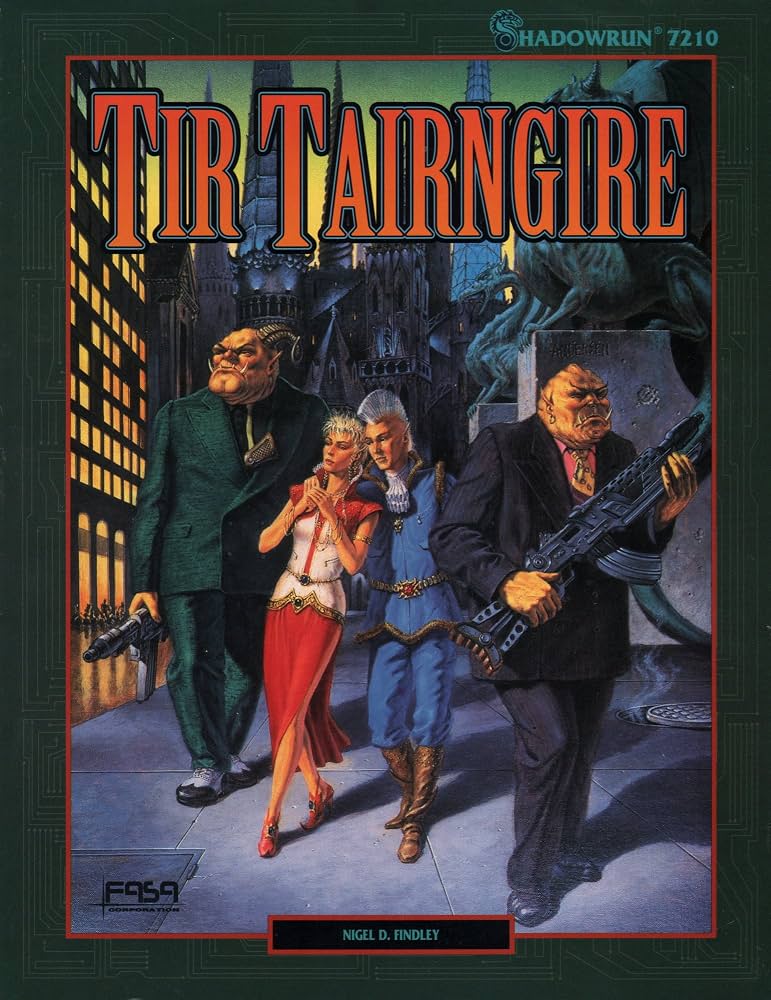
Tír Tairngire performs a similar function through an elven nation. Established in former Oregon, the Tír appears at first to offer something understandable: a homeland in which elves can protect their culture and determine their own future. Yet it is not an egalitarian paradise. The society is secretive, hierarchical, highly controlled, and dominated by political elites. The FASA sourcebook treated the Tír as a functioning state with its own history, economy, laws, social order, and political institutions—not simply a picturesque kingdom of immortal forest dwellers.
Its existence prevents the essay from collapsing into a story in which humans alone possess the capacity for supremacism or exclusion. Elves can experience prejudice in human-majority societies and still participate in an exclusionary elven state. Legitimate grievances do not guarantee just government. Cultural preservation can become hierarchy. Safety can become isolation. Pride can become entitlement.
Even within an elven homeland, not all elves possess equal power. Political standing, wealth, citizenship, family, and access to elite institutions still matter. Metatype solidarity does not abolish class.
That principle extends throughout the Sixth World. The megacorporation is not simply another racial faction. It can employ humans, elves, dwarfs, orks, and trolls while exploiting all of them. It may publicly celebrate metahuman inclusion, sponsor humanitarian campaigns, or market products to marginalized communities. It may also discriminate through hiring, security classifications, insurance calculations, medical policies, housing, or customer demographics.
Corporate behavior is not always free of ideology. Shadowrun’s megacorporations possess distinct cultures, traditions, national associations, and political ambitions. Yet corporate leadership ultimately evaluates people through usefulness, risk, control, reputation, and profit. Diversity may be profitable in one division and inconvenient in another. The corporation can condemn Humanis publicly while quietly funding a politician who protects corporate interests. It can market liberation while owning the infrastructure upon which liberated people depend.
Prejudice therefore becomes a variable in an economic calculation.
Lone Star Security Services makes that calculation visible in law enforcement. Lone Star is not merely a collection of corrupt police officers. It is a corporation selling policing under contract. Its sourcebook describes its corporate organization, procedures, equipment, personnel, history, and expansion into contracted law enforcement across North America.
The distinction changes the relationship between citizen and officer. A public police department is at least theoretically accountable to the public. A private security corporation answers to contracts, budgets, liability concerns, political clients, performance metrics, and corporate leadership. The city purchasing the service is the customer. The person confronted on the street may be treated as a citizen, threat, expense, or public-relations problem depending upon where that person stands within the system.
Again, Shadowrun does not require every officer to be a sadist or bigot. Lone Star can employ conscientious investigators, exhausted patrol officers, careerists, idealists, opportunists, and violent predators. The institution remains dangerous because its incentives operate even when individual officers believe themselves decent.
Some districts are valuable enough to protect. Others are inexpensive enough to abandon. A wealthy corporate neighborhood may receive rapid response and advanced surveillance. A poor metahuman district may experience aggressive raids without receiving meaningful protection. Residents can be simultaneously overpoliced as suspects and underprotected as victims.
Justice becomes something purchased unevenly.
Media then explains that unequal world to the people living within it. Shadowrun has long treated news, entertainment, music, sports, advertising, SimSense, and corporate broadcasting as important parts of the setting rather than decorative background. The media environment does not simply report events. It selects them, frames them, packages them, sells them, and gives them emotional meaning.
An ork demonstration can become a civil-rights movement, riot, terrorist threat, traffic disruption, or corporate inconvenience depending upon who owns the network and which audience it serves. A violent crime committed by a troll may be presented as evidence of metatype danger, while violence inflicted upon trolls may disappear into a brief report from an undesirable district. Corporate humanitarian campaigns become entertainment. Suffering becomes content. Reputation can matter as much as truth.
This does not mean every journalist lies. Shadowrun leaves room for reporters willing to expose corruption, document atrocities, or risk their lives for information. That possibility only matters because the media system surrounding them is powerful enough to suppress, distort, purchase, or weaponize what they discover.
The shadowrunners themselves live inside this web of power. They are outsiders, but they are not automatically revolutionaries. They may expose corporate wrongdoing, defend an endangered neighborhood, rescue political prisoners, or sabotage a Humanis operation. They may also steal research for a rival corporation, destroy evidence, intimidate witnesses, undermine labor organizers, or provide deniable violence to the highest bidder.
Their marginal status gives them freedom, but not innocence.
That is why Shadowrun’s politics work particularly well as a role-playing setting. Players are not asked merely to observe injustice in fictional history. They must choose what contracts to accept, whom to trust, what evidence to reveal, and which compromises they can tolerate. The world rarely allows them to remain untouched by the machinery they oppose.
A run described as “just business” may change an election, destroy a community, strengthen a corporation, expose an atrocity, or provoke a retaliatory attack. The runners may not understand the consequences until long after they have been paid.
Identity in the Sixth World is therefore never one-dimensional. A person has a body and metatype, but also a family, neighborhood, citizenship, income, legal identity, profession, magical ability, corporate affiliation, religion, reputation, political commitments, cybernetic modifications, and private loyalties. None of these completely erases the others.
An ork may experience human prejudice while holding power over poorer orks. An elf may be targeted in one country and privileged in another. A Native government may embody liberation while enforcing exclusionary policies. A human may belong to the demographic majority while remaining SINless, homeless, and disposable. A corporate citizen may possess legal protections that a resident of the same city cannot imagine.
Shadowrun recognizes group identities without reducing individuals to representatives of those groups. It permits cultures to possess recognizable patterns while allowing their members to reject, reinterpret, defend, exploit, or betray those patterns. It portrays institutions as powerful without pretending that individuals have no agency inside them.
Most importantly, it does not claim that prejudice is caused solely by a handful of evil people. Nor does it absolve evil people by placing all blame upon an impersonal system. It shows individuals making choices within institutions that reward some choices, conceal others, and magnify their consequences. Political organizations transform fear into policy. Governments turn populations into security problems. Corporations assign monetary value to human beings. Media outlets convert events into narratives. Police contracts decide which neighborhoods matter. Communities respond through solidarity, withdrawal, activism, crime, commerce, or violence.
This is why prejudice in Shadowrun feels believable. It was not painted onto the Sixth World as a moral lesson. It grew from the way the Sixth World worked.
Shadowrun did not eliminate difference. It did something far more difficult: it allowed differences to remain meaningful without making them the final measure of a person’s worth. It did not purify the future of hatred. It imagined how hatred would adapt to new bodies, new nations, new technologies, and new opportunities for profit.
The setting trusted players to recognize injustice without flattening every conflict into oppressors and saints. It trusted them to understand that victims can possess flaws, that liberators can become rulers, that corporations can advertise virtue while practicing exploitation, and that ordinary people can participate in evil without thinking of themselves as villains.
Shadowrun did not make prejudice simple enough to condemn from a comfortable distance.
It made prejudice part of the city, the law, the economy, the family, the news, the workplace, the police station, the corporate boardroom, and the shadowrun itself.
Corporate D&D
Dungeons & Dragons did not begin as a carefully managed cultural institution. It began as a strange, uneven, inventive game assembled from miniature wargaming, mythology, pulp fiction, Tolkien, medieval romance, horror, and the personal preferences of a small number of designers. Its earliest books were inconsistent because the game itself was still being invented. One rule suggested a clear limitation; another invited the referee to ignore it. One creature appeared as an enemy; another passage hinted that almost anything could become a player character. Dwarfs, elves, halflings, humans, orcs, Goblins, and countless other peoples were not organized according to a single philosophical theory of identity. They were game pieces, literary inheritances, imagined populations, tactical categories, and campaign possibilities all at once.
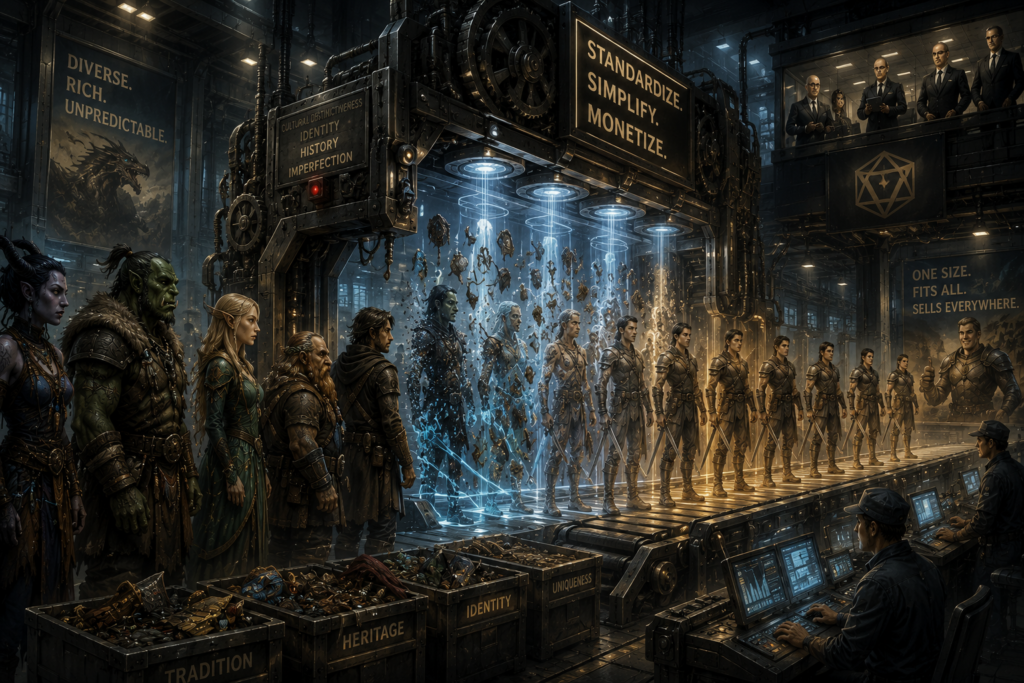
Modern D&D is created under entirely different conditions. Wizards of the Coast does not merely publish a game. It manages one of the most recognizable fantasy brands in the world. Every major decision can affect digital subscriptions, licensing partners, international markets, organized play, streaming productions, video games, merchandise, corporate reputation, employee morale, and millions of players who approach the hobby from conflicting cultural and political positions.
That difference is the real subject of Corporate D&D.
The question is not whether the original designers were innocent and the modern designers corrupt. Nor is it whether diversity is good or bad. The question is what happens when fantasy worldbuilding becomes subject to the public language, risk calculations, editorial procedures, consultants, and communications strategy of a global corporation.
Early D&D treated fantasy peoples as mechanically distinct. Dwarfs, elves, halflings, and humans possessed different abilities, limits, senses, lifespans, class options, and advancement restrictions. Advanced Dungeons & Dragons assigned ability-score adjustments, class limitations, minimums, maximums, and level caps according to race. A Dwarf might receive greater Constitution but lower Charisma. An Elf could combine fighting and magic in ways unavailable to others, yet face advancement limits. Humans were often less gifted at low levels but possessed the long-term advantage of unrestricted advancement.
These rules can be criticized. They associated inherited identity with physical and mental tendency. They sometimes merged biology, culture, morality, and game balance into a single racial package. They could make one people naturally better suited for intelligence, strength, leadership, or obedience. They also reflected the assumptions of the fiction from which D&D borrowed.
Yet early D&D did not possess a coherent racial doctrine. Its categories were too inconsistent for that. Alignment sometimes represented cosmic allegiance, sometimes moral character, and sometimes a convenient method for sorting armies and monsters. A people described as evil in one source might later produce a famous heroic exception. A creature written as an enemy might eventually become playable. Dungeon Masters regularly discarded restrictions they considered inconvenient.
The game then spent decades loosening its own boundaries. Second Edition softened some language and expanded setting-specific cultures. Planescape made philosophy and faction more important than species. Eberron reimagined Orcs, Goblinoids, and other traditionally hostile peoples through histories that were not reducible to inherent wickedness. Drizzt Do’Urden transformed the good Drow from a theoretical exception into one of the most commercially successful characters in the entire brand. Third Edition standardized rules for playing numerous creatures previously confined to monster books. Fourth Edition placed Tieflings and Dragonborn among the central heroic peoples.
Modern flexibility did not suddenly appear in 2020. D&D had been complicating its own assumptions for years.
The original 2014 version of Fifth Edition still preserved a recognizable older structure. The Player’s Handbook used the word race. Each race granted ability-score increases and other traits. Some of those traits were clearly physical: size, speed, darkvision, resistance to poison, breath weapons, innate magic, or unusual movement. Others were obviously cultural or learned: languages, weapon training, tool proficiencies, and particular skills.
Ability-score increases sat uneasily between these categories. A Dwarf gained Constitution. An Elf gained Dexterity. A Half-Orc gained Strength. A Tiefling gained Charisma. These bonuses communicated archetype and difference, but they also influenced optimization. Because Fifth Edition’s mathematics made the difference between beginning with a 14 and beginning with a 16 significant, certain combinations were simply more efficient.
A player could create a Dwarf wizard, Half-Orc scholar, or Halfling barbarian, but the rules quietly asked that player to accept a weaker starting position for choosing the unconventional concept. Many players disliked that pressure for reasons that had nothing to do with politics. They wanted unusual combinations to function as well as familiar ones.
That mechanical complaint became entangled with a larger cultural controversy.
In June 2020, Wizards of the Coast publicly announced that it was reconsidering how D&D portrayed race, particularly Orcs and Drow. The company stated that some older descriptions had used language reminiscent of real-world ethnic prejudice and promised to depict those peoples as more morally and culturally complex. It also announced greater character customization, reviews of legacy material, and the use of outside experts.
That official statement matters. Critics did not invent the connection between D&D’s fantasy peoples and contemporary racial concerns. Wizards itself made the connection.
However, the statement does not prove every interpretation later attached to it. It does not prove that every Orc was intended as an allegory for a real human population. It does not prove that every racial ability modifier was created from racist ideology. It does not establish that every later change came from the same motive.
The company’s statement tells us how Wizards publicly framed the issue. It does not grant access to every internal discussion involving designers, executives, marketing teams, employees, lawyers, consultants, or consumer research.
That distinction became increasingly important because the community reacted to the same changes for different reasons.
Some players believed the game was finally correcting inherited assumptions that should have been abandoned years earlier. Some wanted only greater mechanical freedom. Some supported removing prescribed morality but opposed deleting cultural lore. Some regarded the entire project as ideological interference. Others suspected that Wizards was less interested in justice than in protecting a profitable brand from controversy.
All of these interpretations appeared simultaneously.
Later in 2020, Tasha’s Cauldron of Everything introduced the optional “Customizing Your Origin” rules. Players could move ability-score increases and exchange some languages or proficiencies. A Dwarf no longer had to place bonuses into the abilities traditionally assigned to Dwarfs. An Orc could begin with greater Intelligence. An Elf could emphasize Strength.
The rule solved a real game problem. Unconventional concepts became easier to build without sacrificing effectiveness. It also advanced the company’s stated goal of avoiding the idea that every member of a people must possess the same mental or physical tendencies.
Yet the solution exposed a deeper design weakness. D&D’s racial bonuses had been doing too many things at once. They indicated population averages, communicated archetypes, encouraged certain classes, balanced options, and implied cultural identity. Allowing the bonuses to move improved character freedom, but it did not explain which differences were physical, which were cultural, or how a fantasy world should distinguish a Goliath from a Halfling.
The rule solved optimization more successfully than philosophy.
The later removal of negative ability modifiers was easier to defend. An Orc player character no longer suffered an Intelligence penalty. A Kobold no longer suffered a Strength penalty. This prevented the rules from defining every player character from those peoples as intellectually or physically deficient.
Removing racial alignment from player options also made sense. A player controls the character’s moral choices. A heroic Orc should not need to begin with a rule explaining that members of the character’s people are naturally inclined toward evil.
The more difficult issue was lore.
The 2021 errata to Volo’s Guide to Monsters removed alignment descriptions, modified racial mechanics, and deleted sections of monster lore. Mordenkainen Presents: Monsters of the Multiverse continued the revision by making numerous peoples more portable between settings, loosening languages and ability scores, and rewriting the origins or cultural descriptions of Goblins, Hobgoblins, Kobolds, and others.
Wizards’ official explanation emphasized player freedom and multiversal usefulness. A Goblin in one setting should not be forced to share the same culture as a Goblin in another. A player should not need to portray a moral exception merely to create a Goblin hero.
That is defensible.
The problem arises when removing a culture is mistaken for creating cultural depth.
The earlier material may have been flawed, narrow, or overly hostile, but it still gave Dungeon Masters something concrete to use. It described beliefs, habits, conflicts, crafts, hierarchies, religions, and survival strategies. When such material is removed without replacement, the result is not automatically liberation. It may simply be emptiness.
One widely discussed example was the removal of the Lizardfolk’s Cunning Artisan trait. The ability represented learned practices through which Lizardfolk fashioned useful equipment from defeated creatures and available materials. Critics did not necessarily object to separating that skill from inherited biology. They objected that the culture itself disappeared rather than being relocated into a background, society, or setting.
This reveals the central weakness of Corporate D&D. Wizards became increasingly skilled at identifying what should not be universally attached to a species. It was less consistent at providing an equally rich answer to what should replace it.
The transition from race to species illustrates the same pattern. In December 2022, Wizards officially announced that the revised rules would abandon the term race. The company said that species had been selected in consultation with outside cultural experts and invited playtest feedback.
Supporters argued that the change created useful distance between fantasy peoples and real human races. Elves, Dragonborn, Dwarfs, and Orcs are not ordinary human ethnic groups. Calling them species may therefore reduce direct real-world analogy.
Critics responded that species sounds more biologically rigid, not less. The word invites scientific questions that D&D’s magical cosmology cannot answer consistently. It becomes especially awkward when different peoples can produce children together, descend from gods, emerge from magical transformations, or vary by setting.
Both reactions are reasonable.
What matters is that the change of terminology did not resolve the underlying problem. D&D still had to decide which traits came from the body, which came from ancestry, which came from upbringing, which came from culture, which came from divine or magical origin, and which belonged only to individuals.
The 2024 Player’s Handbook offered a more systematic answer. Species retained concrete traits such as size, speed, senses, resistances, innate magic, breath weapons, or unusual movement. Ability-score increases moved to background, representing the character’s formative experience rather than inherited identity.
This is more coherent than simply placing bonuses anywhere. A character’s life now influences ability development.
Yet even this solution transfers rather than eliminates optimization pressure. Published backgrounds offer particular ability choices. A player may select a background because it supports the class’s primary score rather than because it fits the character’s history. The game has moved mechanical expectation from species to profession and upbringing.
The new design is not absurd. It may even be superior. But it demonstrates that the six ability scores are broad abstractions incapable of carrying all the biological, cultural, and personal meaning repeatedly assigned to them.
Modern D&D also made Orcs a core Player’s Handbook species. This was a logical recognition of how players had already used them for decades. Orc heroes should not need to be treated as impossible anomalies.
The essential question is not whether Orcs may be heroic. Of course they may…depending upon how they are envisioned by the creators of the fiction.
The question is whether Wizards will give Orc societies enough history, religion, politics, conflict, beauty, cruelty, and internal disagreement to feel like real peoples—or whether it will merely say that Orcs can be anything and leave the Dungeon Master to construct the rest.
Freedom is not the same as worldbuilding.
The disappearance of Half-Elves and Half-Orcs as separate core options presents a similar tension. Wizards may have wanted to avoid privileging only two forms of mixed ancestry or to simplify mechanics. Yet allowing a player to describe mixed parentage while selecting the mechanics of only one species can make a mixed identity mechanically invisible.
The official rules may intend openness. Some players experience erasure. Those are not identical claims, and the essay must not confuse them.
Corporate management became visible not only in mechanics but in production procedure. Wizards publicly confirmed the use of cultural and sensitivity consultants. Such consultants can improve a book. They can identify historical errors, expose unintended associations, offer subject expertise, and help writers create cultures beyond their own experience.
Their presence does not prove censorship. Nor does a consultant credit prove quality. The public rarely knows which recommendations were made, which were followed, or how much authority a consultant possessed.
The Hadozee controversy demonstrated the limits of the managed process. Spelljammer: Adventures in Space presented simian humanoids whose backstory involved magical experimentation and intended sale as enhanced laborers or soldiers. Critics recognized disturbing associations involving simian imagery, enslavement, and historical racial dehumanization. Wizards apologized, removed text digitally, altered later printings, and promised better review. The incident supports several conclusions at once.
The material reasonably troubled many readers. The company was right to reconsider it. There is no need to prove that the original writer consciously intended a racist allegory for the combination to create an ugly effect.
At the same time, Wizards had already emphasized its review procedures and use of consultants. The material nevertheless survived editing, art direction, approval, printing, and release. The corporation then answered the failure with another corporate statement and another promise of procedural reform. That is the logic of Corporate D&D: greater management does not eliminate mistakes. It changes the method through which mistakes are corrected and publicly explained.
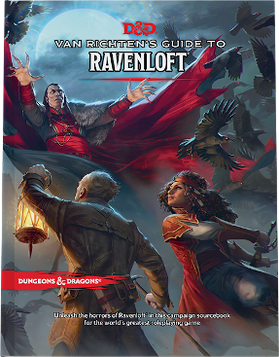
Recent books also provide evidence that consultation can add rather than merely subtract. Journeys Through the Radiant Citadel built adventures around civilizations inspired by numerous cultures beyond the traditional pseudo-European fantasy framework. At its best, this approach widened D&D’s imaginative range and invited writers to construct places from cultural knowledge that the older game rarely possessed. Likewise, Van Richten’s Guide to Ravenloft expanded Gothic horror beyond a narrow European model and revised the Vistani after years of criticism concerning stereotypes of itinerant people, criminality, drunkenness, and curses.
These books deserve serious credit where they created usable cultures, compelling villains, and distinctive conflicts. A critique that treats every attempt at broader representation as corporate decay would be dishonest and artistically blind. The real standard should be whether the work became richer.
Art direction makes the change visible. The revised core books depict a broader range of human ethnicities, body types, ages, genders, disabilities, and heroic fantasy peoples. Orcs appear as protagonists and citizens rather than only raiders. Women occupy martial and authoritative roles without being treated as unusual. Adventuring parties increasingly resemble the actual diversity of the modern audience. There is nothing inherently wrong with this. Much of it is an improvement.
The criticism becomes legitimate only when representational intention overwhelms the coherence of a particular place, culture, or scene. A fantasy city should feel as though its people belong to its history. A royal court, isolated village, nomadic clan, military order, and cosmopolitan trade center should not all appear socially interchangeable.
That judgment must be made from actual artwork, not from resentment that more kinds of people are visible.
The controversy surrounding Kyle Brink reveals how corporate communication can distort everything around it. During the 2023 Open Gaming License crisis, Brink served as Executive Producer of Dungeons & Dragons. In an interview concerning diversity and leadership, he said that he was no longer the face of the hobby and that “guys like me can’t leave soon enough.”
The surrounding discussion concerned the overrepresentation of white men in leadership and the need to make room for others. Brink did not clearly announce that white male players should leave D&D. Many commentators nevertheless interpreted the statement that way.
It would be dishonest to report the hostile interpretation as official Wizards policy. It would also be dishonest to pretend that critics invented the problem from nothing. A senior executive speaking during a crisis chose words that predictably sounded contemptuous toward a large portion of the audience. The context narrows the meaning. It does not make the wording wise.
This distinction between statement and interpretation must remain central. Wizards officially changed rules, terminology, lore, and production practices. Community members then interpreted those changes through their own experiences: some saw overdue inclusion, some saw mechanical improvement, some saw cultural erasure, some saw ideological hostility, and others saw corporate brand management.
None of those interpretations can simply replace the evidence.
The most convincing criticism of modern D&D is therefore not that it includes diverse heroes, abandons fixed alignment, permits intelligent Orcs, or consults people with cultural expertise. Those developments can improve the game.
The deeper problem is that Wizards increasingly appears to treat fictional danger, inherited difference, cultural conflict, and moral ambiguity as matters requiring institutional control before they can become imaginative material. Shadowrun took difference and asked what governments, corporations, police, media, political movements, neighborhoods, and families would do with it.
Corporate D&D increasingly asks which differences can safely be presented as universal, which must become individual choices, which should be transferred into backgrounds, and which are better left undefined. That second approach produces a more flexible global product. It may also produce a safer one.
But safe is not the same as alive.
A meaningful fantasy people needs more than permission to be good. It needs history, customs, ambitions, grievances, internal factions, virtues, crimes, sacred traditions, prejudices, economic pressures, and reasons to disagree with itself. Removing inherited evil is easy. Replacing it with a believable society is difficult.
Some of Wizards’ reforms were reasonable, overdue, and mechanically useful. Flexible ability scores widened character choice. Negative mental penalties were crude. Player-character morality should belong to the player. Diverse writers and consultants can create material the old game never imagined. Broader artwork can make the world feel larger. Yet these improvements do not excuse cultural emptiness, vague lore, careless executive language, or corporate revisions that remove more than they create.
The decisive question is not whether modern D&D became kinder. It is whether Wizards of the Coast still trusts fantasy to portray dangerous ideas without endorsing them, and whether it trusts players to distinguish a fictional world containing prejudice from a rulebook demanding prejudice.
Shadowrun built its world by placing ugly realities inside it and exploring their consequences. Corporate D&D has increasingly attempted to protect its world by controlling which ugly realities may be stated at all.
My Perspective
My objection to Corporate D&D is not that racism is imaginary, exaggerated, or unworthy of serious attention. I know racism is real because I have encountered it repeatedly, from different people, in different places, and through different institutions.
What I reject is the simplified American narrative in which prejudice always moves in one approved direction, one group is permanently assigned the role of aggressor, another is permanently assigned the role of victim, and every conflict must be forced into the same ideological framework.
My own life has never fit that model.
Around 1992, my mother contacted Toledo Public Schools because she wanted my siblings and me transferred to a better school. She was educated, articulate, and pleasant. Over the telephone, the school officials indicated that the transfer would not be a problem. Then she arrived in person.

Once they realized that the intelligent, well-spoken woman they had been dealing with was Black, their answer changed.
Suddenly, there was nothing they could do.
My mother did not beg them to reconsider. She withdrew us from the public-school system and began homeschooling us. That decision also meant walking away from the path I had been on through the Young Scholars Program connected to Ohio State University. I forfeited that opportunity, and at the time I did not care very much.
School had not become a place of promise for me. It had become a place where I was expected to tolerate hostility from other children, particularly darker-skinned Black children who treated my mixed ancestry and lighter complexion as reasons to antagonize me. I was not being taught some uplifting lesson about solidarity among the oppressed. I was being taught that people who had themselves experienced prejudice were perfectly capable of inflicting it upon someone else.
That does not mean Black people are uniquely racist. It means Black people are human.
Human beings form tribes, police boundaries, resent differences, exploit weakness, and invent reasons to mistreat people who do not fit comfortably into their preferred categories. Historical suffering does not automatically make a person wise, compassionate, or morally incapable of becoming an aggressor.
Years later, my daughter encountered a similar lesson when I brought her to the United States. She attended school in Holland, Ohio, near Toledo. She looks recognizably Mexican. The students who mocked her, provoked her, and caused problems for her because of her appearance were Black children.
Once again, reality refused to obey the approved American script.
I am not presenting these incidents to deny anti-Black racism. That would be absurd. I am presenting them because any theory of prejudice that has no room for experiences like mine or my daughter’s is not a serious theory. It is propaganda.
The problem with American racial discourse is not that it notices genuine injustice. The problem is that it often reduces human behavior to a moral diagram so simple that large portions of reality must be ignored to preserve it.
My experience in Mississippi made the importance of locality equally clear. I spent time around a large Black population without experiencing hostility from the community. Then I crossed an invisible boundary into Ridgeland, directly beside Jackson, and the rules changed.
In 2025, Ridgeland police approached me three times within approximately two weeks while I was parked.
The first two encounters occurred in a Walmart parking lot. On both occasions, officers said that some crime had recently been committed in the area and that I matched a description. I was questioned, inspected, and treated as someone who needed to explain his presence.
The third encounter happened while I was parked outside the Ridgeland library, immediately beside the police station. I was sitting inside my white box truck, which also served as my tiny home, working on Gloria Nocturna. The police said someone had reported a “suspicious vehicle.”

I was not stalking anyone, breaking into anything, or roaming through private property. I was sitting in my own home, parked outside a public library, writing a tabletop role-playing game.
Yet the vehicle was suspicious, and so was I.
I have the appearance of someone who may be mixed-race or otherwise nonwhite. I did not look as though I naturally belonged in a polished, affluent, overwhelmingly white part of Ridgeland. That alone seemed sufficient to make me repeatedly investigable.
People sometimes ask what made me believe the officers were looking for a reason to arrest me. The answer is that I was present. I understood the pattern. I had already been approached twice under the nearly unfalsifiable claim that I resembled someone connected to an unspecified crime, and now the home in which I was quietly working had become a suspicious vehicle.
One does not need a confession from an officer to recognize when neutral-sounding procedure is being used as a fishing expedition.

Later, while dealing with the court system, I saw more than fifty people waiting to address their cases. Almost all of them were Black, and many appeared to be there over petty matters. Even the prosecutor quietly advised me to get out of Ridgeland because the area was “very conservative.”
I did not understand him to be warning me about marginal tax rates.
The invisible municipal boundary between Jackson and Ridgeland mattered. The people, police culture, expectations, and tolerance for outsiders changed. Nothing about me changed as I crossed that line, but my practical relationship with authority did.
I encountered the same racial boundary in small-town Tennessee after asking about the local Masonic lodge. The lodge secretary came to visit me, and within the first few moments of our conversation on the porch, he volunteered, “Yeah, the Grand Lodge of Tennessee doesn’t recognize the Prince Hall Lodge.” I had not asked about Prince Hall Freemasonry. I had not mentioned it at all. Prince Hall lodges are historically associated with Black Freemasons, so the meaning seemed unmistakable: before discussing my character, beliefs, or qualifications, he wanted me to understand that he had noticed I was not a white man and that Tennessee Masonry maintained a racial dividing line. Years earlier, my mother had asked her close friend Judy Rau why she did not join the women’s branch of Freemasonry, since Judy’s husband, Donald Rau, was a thirty-second-degree Mason affiliated with the Northern Light Lodge in Maumee, Ohio. Judy’s answer was simple: “They’re racist, Joanie.” Judy was white, my mother Joan had several close white friends, and Judy despised racism. Once again, the supposedly enlightened language of brotherhood, moral improvement, and universal fellowship collapsed when confronted with the racial habits of American institutions—including institutions that congratulated themselves for teaching men virtue.
Shadowrun understands this kind of reality better than Corporate D&D does. In Shadowrun, jurisdiction matters. The police force matters. The neighborhood matters. Corporate security, municipal law, social class, appearance, identification, and who is believed to belong all matter. A person may cross a street, a district line, or a corporate border and suddenly become subject to an entirely different kind of power.
The setting does not pretend that prejudice floats abstractly in the air. It gives prejudice institutions, uniforms, contracts, weapons, detention cells, and financial incentives.
I encountered another version of American exclusion in Alabama. I had approximately $8,000 available and was prepared either to purchase a used vehicle or make a substantial down payment. Three dealerships would not sell me a car. A rental company refused to rent me the same vehicle I had returned only hours earlier.
After enough refusals, the individual excuses ceased to matter. I understood that I was somewhere I was not welcome.
I do not need to claim that every person in the town belonged to an organized white-nationalist movement. Open membership in a racist organization is not necessary for exclusion to function. A dealership can refuse service. A rental counter can suddenly discover a problem. A police officer can decide that a vehicle is suspicious. A school administrator can become helpful on the phone and helpless in person.
Prejudice often survives not through dramatic declarations but through small discretionary decisions made by people who understand that they will probably never be required to explain themselves.
White nationalism is real, and I have no desire to minimize it. What I reject is the habit of treating it as the only form of racial tribalism worth recognizing. Prejudice does not become harmless when it comes from someone who belongs to a historically mistreated population. It does not become progressive when directed toward a mixed-race child, a Mexican girl, an immigrant, or someone considered insufficiently authentic by members of his supposed group.
The United States constantly advertises itself as a uniquely moral and tolerant society. My experiences repeatedly revealed how conditional that tolerance could be.
In 2026, after my vehicle broke down, I left Reno, Nevada, on foot with my wife and daughter. There had been significant snowfall. We were moving through a middle-class neighborhood, visibly cold and carrying what we could.
I asked three white residents whether they had a blanket, sheet, tarp, or anything similar that they could spare.
All three said no.
Not one household claimed to have an old blanket in a closet, an unused sheet, a plastic tarp in a garage, or anything else that could help a family traveling with a child after unexpected heavy snow in Reno, Nevada.
The first nonwhite family I approached was from India. They immediately gave us a blanket, food, and water. Are we supposed to be believe that was mere coincidence?
That incident does not prove that every white American is selfish or that every Indian family is generous and empathetic. It does not provide a sociological law. It does, however, explain what that neighborhood felt like to me. Three comfortable households saw a family in obvious need and found nothing to offer. The first immigrant family we approached responded without hesitation.
Experiences like that accumulate.
They are why I have little patience for America’s flattering mythology about itself. The country speaks constantly about compassion, equality, diversity, and human dignity. Yet schools, businesses, police departments, courts, and comfortable neighborhoods repeatedly taught me how quickly those principles could disappear when an inconvenient person stood directly in front of them.
Moving to Mexico did not reveal a perfect society. Mexico has its own class divisions, colorism, regional prejudices, discrimination against Indigenous people, hostility toward migrants, corruption, and historical injustices. I would never claim that Mexico has no racism.
I can only describe my experience.
Race has not dominated my ordinary interactions in Mexico in the same obsessive, institutionalized manner that it repeatedly did in the United States. People may notice that I am foreign, mixed, American, poor, unusual, or traveling under strange circumstances. Yet I have not felt constantly forced into the narrow American racial categories through which every interaction is interpreted before it even occurs.
That difference matters.
It does not mean Mexico is morally superior in every respect. It means the American way of discussing race is not universal. Other countries have different histories, categories, prejudices, and social tensions. Leaving the United States does not mean leaving injustice behind. It means discovering that American institutions do not possess the only map of human conflict.
Shadowrun understands this too.
In Shadowrun’s future, Mexico does not become an innocent refuge from the corrupt United States. It becomes part of Aztlan, a powerful nationalist state deeply intertwined with Aztechnology. Aztechnology presents a polished public face while concealing exploitation, political domination, ritual violence, and some of the darkest activities in the setting.
The lesson is not that America is evil and Mexico is pure. The lesson is that power changes its language and local form.
Travel teaches a person that one country’s assumptions are not the laws of the universe. The same lesson applies to tabletop role-playing games.
Someone who rarely leaves his own region can mistake local customs for human nature. Someone who experiences the world only through American media and institutions can mistake America’s racial categories for an exhaustive explanation of prejudice everywhere.
A player who knows only Dungeons & Dragons can make the same mistake.
He begins to believe that six ability scores are simply what role-playing games use. Classes, levels, armor class, hit points, alignment, saving throws, and D&D’s approach to fantasy species become invisible assumptions rather than design choices. If Wizards of the Coast changes its explanation of race, culture, morality, or character creation, the loyal fan may accept that explanation as though the corporation had defined the boundaries of fantasy itself.
Cultural provincialism and gaming provincialism share the same defect: people mistake the walls of their enclosure for the boundaries of reality.
Dungeons & Dragons is not tabletop role-playing itself. Wizards of the Coast does not own the limits of imagination. Its designers, executives, consultants, marketers, and public-relations staff are not uniquely qualified to determine how fictional peoples must be portrayed.
Players who never seriously explore another game may not realize how strange D&D’s assumptions actually are. They may never encounter systems without classes, levels, hit points, fixed spell slots, or broad ability scores. They may never see settings that approach prejudice, religion, economics, technology, culture, injury, and identity through entirely different structures.
Shadowrun is especially valuable because it refuses the comfortable simplicity of Corporate D&D. Its world is excessive, contradictory, ugly, vibrant, and politically dangerous. It contains nations that liberate one population while oppressing another, corporations that sell a friendly public image while committing atrocities, communities divided by class and metatype, and institutions that use neutral rules to achieve selective outcomes.
That resembles the world I have experienced.
My life has not taught me that racism is imaginary. It has taught me that racism is opportunistic, local, tribal, institutional, and capable of moving in directions that respectable American discourse often refuses to acknowledge.
- It can come from a school administrator who changes her answer after seeing a Black mother.
- It can come from Black children targeting a mixed-race child or a Mexican girl.
- It can come from police officers who repeatedly decide that a nonwhite man or his home looks suspicious.
- It can come from businesses that suddenly find reasons not to accept money.
- It can appear in a courtroom full of people arrested for petty offenses.
- It can reveal itself through people who possess plenty but claim to have nothing when a cold family asks for help.
These experiences do not provide a universal theory of race. They provide something more limited and more difficult to dismiss: a reason for distrusting universal theories that pretend such experiences do not belong in the conversation.
That is also why I distrust anyone who allows Wizards of the Coast to define the boundaries of tabletop role-playing for him.
The world is larger than the United States.
Tabletop role-playing is larger than Dungeons & Dragons.
And human prejudice is far more complicated than any corporation’s approved explanation of it.
The Next Run Belongs to You
Every role-playing world is silent until someone gathers a group around a table and speaks the first sentence. Nothing happens until someone opens the book, looks at the other players, and says something like, “Tonight, you are shadowrunners.”
Until the Game Master and the players bring the story into being, cyberpunk Seattle is not going to be glowing beneath acid rain, the Matrix is not going to be haunted with lethal intrusion countermeasures and corporate security hackers, and dragons are not going to be making secret moves behind governments and corporations. Without the collaborative storytelling of the group, no fixer is going to be calling with an opportunity that sounds too profitable to be safe, and Mr. Johnson is not going to be offering criminal mercenary contracts in some smoke-filled back room, or ordering his bodyguard to shove a credstick in someone’s eye-socket.
That is where Shadowrun truly lives
It does not live only in trademarks, publishing contracts, corporate offices, official timelines, or whichever company presently possesses the legal authority to place the name on a book cover. Intellectual-property ownership determines who may officially publish Shadowrun. It does not grant the owner unlimited authority over what Shadowrun means to the people who have carried it for decades.
- A corporation can own a title without understanding its spirit.
- It can inherit a legacy without deserving it.
- It can publish an official edition that fails to preserve what made the game worth inheriting.
Dungeons & Dragons has already demonstrated this distinction. Wizards of the Coast possesses the legal power to define the current commercial product called Dungeons & Dragons, and most people will naturally assume that whatever Wizards publishes is what D&D is. Yet legal ownership does not make every decision wise, every revision an improvement, or every new product faithful to the creative legacy built by Gary Gygax, Dave Arneson, and the generations of players who transformed their invention into a worldwide form of storytelling.
The same principle must apply to Shadowrun.
Catalyst Game Labs deserves genuine credit for keeping the setting in active publication, supporting organized play, producing new material, maintaining the game through changing markets, and introducing the Sixth World to players who never encountered the FASA editions. That stewardship matters, and it deserves acknowledgment.
But gratitude is not surrender.
No publisher should receive unconditional loyalty merely because it currently controls the license. If Catalyst preserves the qualities that made Shadowrun distinctive, it deserves support. If it produces excellent books, those books deserve to be purchased, played, reviewed, and recommended. If it corrects mistakes and strengthens the setting, fans should recognize that work. But if Catalyst—or any future rights holder—ever strips Shadowrun of its complexity, flattens its cultures, weakens its moral danger, abandons its atmosphere, or treats the setting merely as a recognizable logo attached to whatever product corporate management believes will sell, then fans have no obligation to pretend that the result embodies the soul of Shadowrun.
The official product and the living tradition are not always the same thing.
Shadowrun belongs legally to whoever holds the intellectual property. To that, I say big deal.
Imaginatively, and much more importantly, it belongs to everyone who has entered the Sixth World and returned carrying a story.
Shadowrun belongs to the original designers who committed the glorious act of combining cyberpunk, fantasy, crime, horror, espionage, and social collapse into one impossible world. It belongs to the writers who filled Seattle, Denver, Chicago, Aztlan, Tir Tairngire, the Native American Nations, corporate arcologies, barrens, underground communities, and Matrix hosts with histories and conflicts. It belongs to the artists who taught us what a Street Samurai, decker, shaman, rigger, corporate security team, Troll ganger, and Great Dragon should look like. It belongs to the Game Masters who spent evenings preparing buildings their players never entered, villains their players unexpectedly befriended, and elaborate security systems that collapsed after one absurdly lucky roll. It belongs to the players who created characters no official sourcebook could have anticipated. It belongs to the groups who took a minor contact, nameless bartender, disposable guard, or forgotten neighborhood and turned that detail into the heart of a campaign.
A fictional world survives because people continue imagining inside it.
That may be Shadowrun’s greatest achievement.
Shadowrun did not merely provide a setting to consume. It created a world fertile enough to generate other worlds inside it. Every campaign produces its own version of Seattle, its own network of fixers and enemies, its own interpretation of the corporations, its own betrayals, legends, disasters, and improbable victories.
- Somewhere, a team accepted a routine extraction and accidentally started a corporate war.
- Somewhere, runners betrayed Mr. Johnson, rescued the target, lost the payment, and decided they could live with the consequences.
- Somewhere, an insignificant gang became the campaign’s most dangerous enemy.
- Somewhere, a disposable nonplayer character became a trusted friend.
- Somewhere, a character created as a cynical mercenary discovered one principle worth dying for.
Those stories were never published, but that does not make them less real within the imaginative lives of the people who created them.
The greatest Shadowrun adventure ever played may never have appeared in an official book. It may have happened around a kitchen table, in the back room of a game store, inside a college apartment, at a convention, or through a late-night online session among friends separated by thousands of miles. It may now survive only in half-remembered stories that begin, “Do you remember when we tried to break into Renraku?”
That is how role-playing worlds become larger than their creators.
Books tell stories. Movies show stories. Video games allow limited participation in stories whose possibilities have already been programmed. Tabletop role-playing creates stories that did not exist before the people at that particular table began imagining them together.
No writer knows exactly what will happen. No player controls the whole narrative. The gamemaster presents a world, but the players disrupt it. The rules introduce uncertainty. The characters bring competing motives. The dice produce accidents that no author would have planned. The result is not merely entertainment. It is collaborative creation.
Shadowrun taught generations of players that fantasy did not have to remain trapped in an imagined medieval past. Elves did not require ancient forests and royal courts. Dragons did not need to sleep beneath mountains of gold. A shaman could walk beneath neon advertisements. A Troll could ride a motorcycle through an urban sprawl. A magician could negotiate with spirits while a decker invaded a corporate host and a Street Samurai checked the ammunition in a smartgun.
Shadowrun asked one of the most exciting questions in modern fantasy: What happens when the future does not destroy myth, but awakens it?
The answer was not a decorative mixture of swords and computers. Magic transformed economics, politics, warfare, religion, medicine, crime, and identity. Technology transformed how magic was studied, controlled, exploited, feared, and sold. Fantasy and cyberpunk collided so completely that neither remained unchanged.
That is the lesson other fantasy creators should carry forward. Genres are not cages. They are collections of tools. A designer does not honor fantasy by endlessly rearranging the same castles, taverns, monarchies, ancient ruins, and vaguely medieval societies. The tradition survives when creators understand what made those elements powerful and then dare to place wonder somewhere unexpected.
Shadowrun did that.
Its example should encourage designers to combine genres boldly—but not superficially. A meaningful hybrid requires each element to change the others. Adding pistols to a fantasy kingdom does not automatically produce an integrated setting. Adding Elves to a cyberpunk city does not automatically produce Shadowrun.
The world must respond. Technology changes culture. Magic changes law. Geography changes politics. Economics changes morality. History changes what people believe is possible.
The lesson for game designers is equally important: build worlds that can survive players.
Do not construct a setting so fragile that it collapses when the group refuses the intended quest, sympathizes with the wrong faction, questions the official hero, or chooses a solution the author never anticipated.
Create interests rather than scripts. Create consequences rather than sermons. Give factions understandable motives without making every faction equally righteous. Give individuals enough freedom to contradict their cultures, employers, families, and histories. Make mechanics clear enough that players can reach the most interesting parts of the world. Complexity belongs in the setting. Clarity belongs in the rules.
Most importantly, leave room for later creators.
A truly great setting should not be complete. It should contain unexplored neighborhoods, unanswered questions, disputed histories, distant nations, forgotten corporations, hidden magical traditions, and unresolved consequences. Gamemasters should feel invited to create rather than frightened of violating canon.
Canon should provide foundations, not chains.
That principle also defines the proper relationship between fans and publishers.
Support good stewardship. Buy worthwhile books. Leave honest reviews. Introduce new players. Help local game stores. Attend organized events. Encourage writers and artists who understand the setting. Give credit to the people doing excellent work.
But never confuse consuming the newest official product with preserving the world.
- Sometimes preserving a game means returning to an older edition.
- Sometimes it means repairing a rule that has never worked well.
- Sometimes it means rejecting an official development that damages the campaign your group has built.
- Sometimes it means creating an adaptation.
Shadowrun JCd12 is my own attempt to carry the Sixth World forward.
It is not an effort to seize Shadowrun from its creators, replace every edition, or declare that generations of players have been enjoying the game incorrectly. It exists because Shadowrun helped shape the game designer I became, and because I want players who love the setting—but struggle with its traditional mechanics—to experience more of it.
- I want deckers to enter the Matrix without the rest of the table losing interest.
- I want riggers and vehicle specialists to participate without requiring everyone to study a separate technical manual.
- I want magic, cyberware, firearms, social maneuvering, investigation, and cinematic action to coexist within the same session.
- I want new players to discover the Sixth World without first proving that they can survive the rulebook.
That is one expression of appreciation. It is not the only one.
Another person may preserve Shadowrun by running Second Edition exactly as written. Another may begin with Third Edition, Sixth Edition, Anarchy (simplified rules), a computer game, a novel, or a single used sourcebook discovered in a game store. The correct entry point is the one that gets people into the world.
So do not merely agree that Shadowrun matters. Do something with it.
Read one of the classic sourcebooks. Purchase a current book that deserves support. Play one of the computer role-playing games and allow it to introduce you to the atmosphere. Gather a group and run a one-shot shadowrunner mission. Create a fixer, a neighborhood, a gang, or a corporation that has never existed in anyone else’s campaign.
Invite someone whose entire understanding of tabletop role-playing begins and ends with Dungeons & Dragons. Let that person build a character without a class, meet contacts who matter as much as equipment, enter a city where magic and technology compete for the same human soul, and face a mission with no perfect solution. Then encourage that player to make a choice the Game Master did not expect. That is the moment the world becomes theirs.
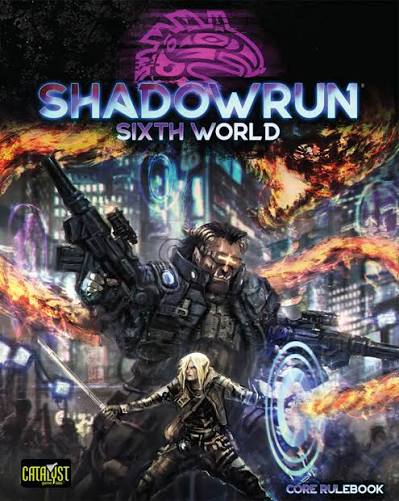
Role-playing does not require everyone at the table to think alike. It requires people with different instincts, skills, temperaments, and ideas to create something together.
A shadowrunning team embodies that truth.
- The decker needs someone to protect the body left behind.
- The Street Samurai needs intelligence, transportation, negotiation, and magical support.
- The face needs teammates capable of acting when persuasion fails.
- The rigger needs people worth extracting.
- The magician needs allies grounded in the physical world.
No one character can do everything, and no one player should control the whole story. That dependence is not a weakness. It is the reason the team exists.
Perhaps that is the most valuable lesson Shadowrun can offer beyond game design and fantasy. People do not need to become identical before they can cooperate. They need a shared purpose, respect for one another’s abilities, and the humility to understand that every person sees a different part of the problem.
The world does not need another generation of players who merely memorize official lore and defend whichever company logo appears on the newest book. It needs people who create. People who question. People who preserve what deserves preservation and improve what needs improvement. People who understand that loving a fictional world does not mean obeying every person who temporarily controls its publication.
- Somewhere, someone who has never heard the words Mr. Johnson is waiting to discover the Sixth World.
- Someone who thinks fantasy means castles and ancient swords is waiting to meet an Elf with a datajack.
- Someone who has only played heroes chosen by prophecy is waiting to become a disposable criminal who must decide whether doing one decent thing is worth losing the payday.
- Someone is waiting to discover that the mission briefing was a lie.
- Someone is waiting to roll the dice, look around the table, and realize that no one—not the gamemaster, not the rulebook, not the publisher—knows exactly what happens next.
Give that person the book.
Build the character. Commit a few crimes to build your reputation, and hopefully earn the privilege of meeting Mr. Johnson.
The Sixth World has survived for nearly four decades.
The next run belongs to you chummer.
About the Author