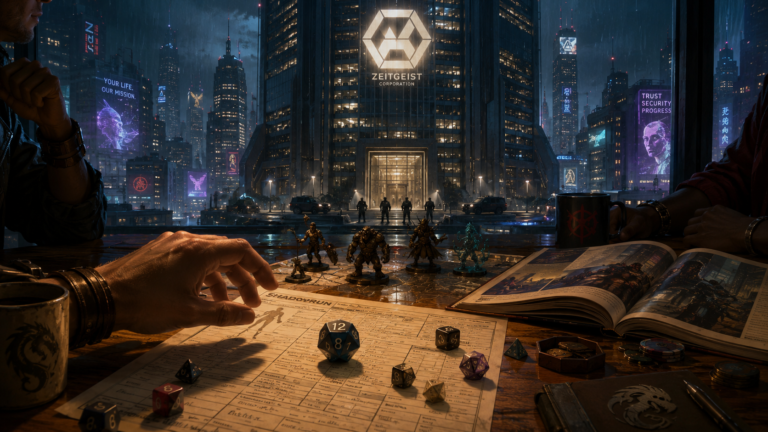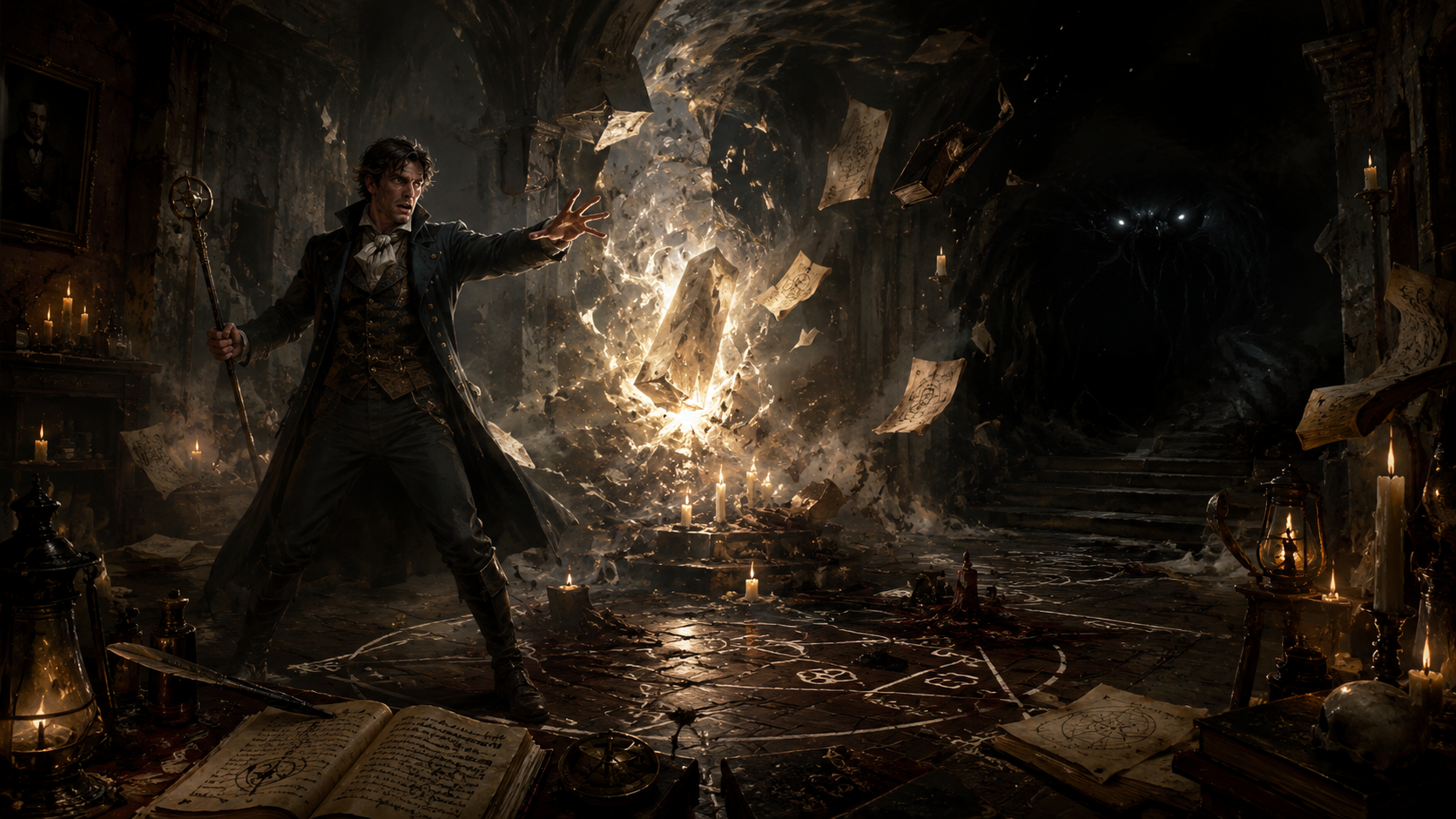
When I started thinking seriously about how magic should work in Gloria Nocturna, I wasn’t trying to reinvent fantasy spellcasting just for the sake of being different. I was trying to solve a much simpler problem: I wanted magic to actually feel like magic. A lot of familiar role-playing game mechanics never gave me that feeling. The old Dungeons & Dragons idea of memorizing a spell, casting it, and then effectively losing it until it was prepared again always struck me as strange. Historically, that system made sense in context: it was heavily influenced by Jack Vance’s Dying Earth stories, where magic really did operate according to that sort of logic. But that wasn’t the kind of magic I was interested in. I wasn’t trying to reproduce Vance. I wanted something that felt closer to occult practice, religious miracle traditions, ritual, altered states of consciousness, and the unsettling possibility that reality itself might sometimes bend—but not without resistance.
Other games have answered the problem of magic in radically different ways. Shadowrun interested me because magical exertion carries Drain; casting isn’t simply a matter of spending a spell slot and moving on. Ars Magica builds an elaborate magical grammar around what a magician is trying to do and what he is trying to do it to. Mage: The Ascension famously explores the relationship between magic, belief, coincidence, and consensual reality. Those systems are evidence of something important: there is no single inevitable way that magic has to work in a roleplaying game. Every magic system makes assumptions about what magic actually is.
My own assumptions came from a much wider and stranger collection of influences. I had spent years reading occult and chaos-magical writers, books about consciousness and reality, Robert Anton Wilson, Peter Carroll, Phil Hine, David Michael Cunningham, Anton LaVey, and others. I had read works such as The Holographic Universe, The Self-Aware Universe, The Conscious Universe, and Wholeness and the Implicate Order. At the same time, I was thinking about the Tanakh, the New Testament, miracle traditions, prayer, prophecy, sacred spaces, ritual actions, and the way supernatural events are actually described in religious literature. I wasn’t taking all of those sources as equally authoritative, nor was I trying to weld them into one grand metaphysical theory. They simply contributed to a question that kept following me around: how can you make the player feel like a real occult magician?
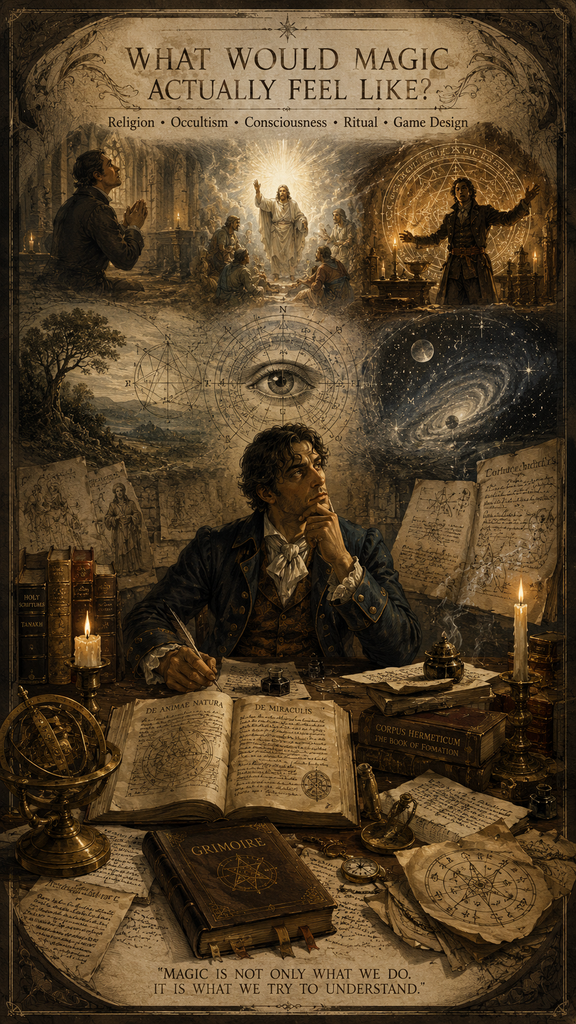
That became the foundation of Codex Arcanum. A magician shouldn’t feel like somebody pressing a supernatural attack button. He should be thinking about whether this is the right place, the right moment, the right method, the right degree of power, and whether reality is going to tolerate what he is trying to do. Sometimes the result should be subtle enough that a skeptic could shrug it off. Sometimes it should be so blatant that everyone in the room knows they have just witnessed something impossible. And sometimes the magician should fail, embarrass himself, exhaust himself, or discover that doing something miraculous has attracted attention he would rather not have.
That is the basic design philosophy behind the magic of Gloria Nocturna: magic and the miraculous should remain connected. If the impossible becomes ordinary, then eventually it stops feeling impossible. My goal was to build a system where every successful working still carries some sense that the character has persuaded, pressured, or violated reality just enough to make something happen that should not have happened at all.
From Coincidence to the Undeniable
One of the first problems I had to solve was what it actually means for something to be magical. If supernatural events happen constantly, openly, and reliably, at some point they cease to function as miracles. They may still be fantastic, but within that world they have effectively become another form of technology. If the baker sees people throwing fireballs across the marketplace every Tuesday afternoon, a fireball isn’t particularly miraculous to him. It is simply one of the things that happens in his world. That isn’t the atmosphere I wanted for Gloria Nocturna. An ordinary person in the fictional planet of Sylva can believe in spirits, curses, miracles, divination, witches, monsters, and all manner of supernatural things without necessarily having witnessed something in his own life that absolutely proves any of them exist.
Player characters are another matter. They encounter the supernatural disproportionately because they deliberately go looking for it. A Black Order patrol descending into a Gloom-infested crypt is not representative of an ordinary Tuesday afternoon in Sylva. These people have intentionally walked into a place where something is wrong with reality. They might witness three impossible things before reaching the second chamber. That doesn’t require the baker back in town to live in a world where levitating furniture and bolts of magical fire are commonplace. This distinction allows Gloria Nocturna to be filled with supernatural adventure while still preserving the supernatural as something genuinely extraordinary.
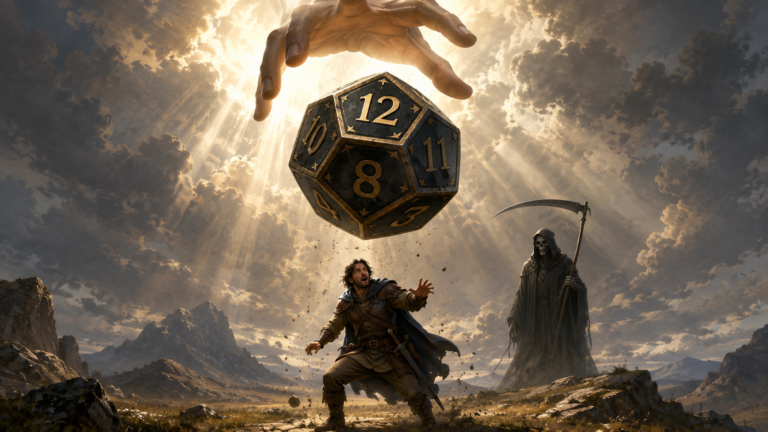
That led directly to one of the central ideas in Codex Arcanum: the Gradient of a Spell. Every Spell represents an underlying supernatural principle that can manifest at four Power Levels: Coincidental (0), Lesser (1), Greater (2), and Supreme (3). These aren’t simply four increasingly large numerical versions of the same effect. The Gradient measures something more interesting to me: as Power increases, the manifestation becomes increasingly difficult to explain as anything other than a miracle.
Consider healing. At Coincidental Power, an injured person might suddenly manage to push through his pain and function normally for a short period. Did the magician heal him? Maybe. Or perhaps adrenaline kicked in. Perhaps the wounded man found a second wind. Perhaps his injury wasn’t quite as debilitating as everyone thought. A believer can look at what happened and say, “That was a miracle,” while the skeptic standing beside him can say, “Bullshit. He pulled himself together.”
Both interpretations can survive.
At the other end of the Gradient, that ambiguity disappears. A Supreme manifestation of Mend Wounds can cause damaged muscle, sinew, bone, and nerve to visibly realign in moments. An injury that should have required weeks or months of recovery is being supernaturally restored in front of witnesses. There isn’t much room left for the skeptic to say that the guy just got his second wind. Reality has done something reality plainly isn’t supposed to do.
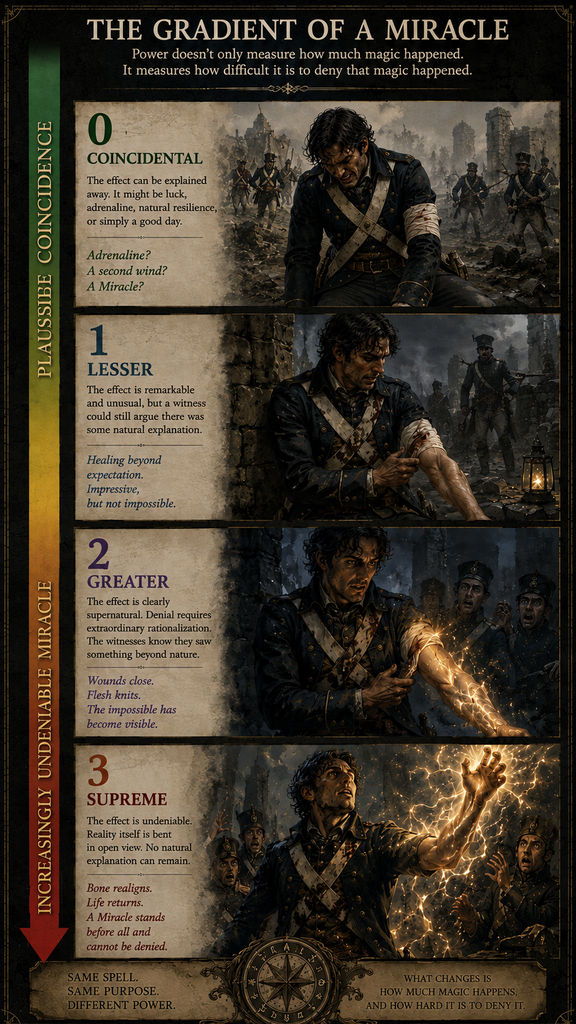
Other Spells follow the same philosophy. At the lowest manifestation of Remove Poison/Disease, nausea, dizziness, irritation, or weakness might temporarily subside. Maybe it was the Miracle. Maybe the person rested, got some fresh air, stopped panicking, and started feeling better. As the Gradient rises, however, the supernatural intervention becomes more forceful and increasingly difficult to explain away.
That distinction is more important to me than simply making the numbers bigger. A conventional progression can easily become: here’s the fire spell, here’s the bigger fire spell, and here’s the really big fire spell. There is nothing inherently wrong with that approach, but I wanted the Gradient to answer a different question. How difficult is it to continue denying that a miracle happened?
That is also why Codex Arcanum doesn’t need ten or twenty different Power Levels. Jack’s Cinematic d12 in general avoids chopping character development into dozens of tiny increments merely so the player can regularly be congratulated for making another number go up. For supernatural power, there are really only a handful of distinctions I care about. Something happened that could easily be coincidence. Something happened that is unusual. Something happened that is very difficult to explain normally. And finally: holy %#^$, everyone just saw that!
Power 0 through Power 3 gives me enough room to model that progression without pretending there is some meaningful metaphysical distinction between seventeen different grades of fireball.
This is where Consensus Reality enters the system. The supernatural objectively exists in Gloria Nocturna. Spirits don’t exist because somebody believes in them. The Gloom doesn’t disappear if enough people become skeptics. Monsters, miracles, supernatural beings, and occult forces have an existence independent of popular opinion. Consensus Reality is therefore not the proposition that human beings simply imagine the universe into existence. It is the idea that ordinary reality possesses a kind of inertia, and that the expectations of conscious observers are among the circumstances a magician has to contend with when attempting to force something extraordinary into it.
An interesting comparison can be made with Mage: The Ascension, although it wasn’t an influence on the development of this system. I’ve never played Mage or read its core rulebook; my only prior exposure was someone briefly explaining to me that its magic becomes more difficult or problematic when what the magician is attempting obviously violates what people consider plausible. In researching this article, I learned more about how Mage handles coincidental and openly supernatural magic, and I can certainly understand why someone familiar with that game might notice a resemblance. Codex Arcanum, however, approaches the idea from a different metaphysical direction. In Gloria Nocturna, human consensus does not create the supernatural: spirits, the Gloom, supernatural creatures, and miraculous forces exist whether anyone believes in them or not. Consensus Reality instead represents part of the resistance encountered when something extraordinary intrudes upon ordinary experience, while the four-stage Gradient measures how far a Miracle has progressed from something that can disappear into coincidence toward something increasingly impossible to deny.
Part of my thinking about this came from sources far removed from RPG design. There is an interesting biblical example in 2 Kings 4, where Elisha instructs a widow to gather empty vessels, enter her house with her sons, shut the door, and begin pouring the small amount of oil she possesses. The oil miraculously continues until the vessels have been filled. Later Jewish commentary notices the apparently unnecessary detail that the door is closed; Rashi connects the privacy of the event with the dignity of the miracle. I find that fascinating. It suggests an old religious intuition that miracles and the circumstances under which they occur are not entirely separate subjects. Who is present, what is happening, and where the event occurs can matter.
I’ve encountered similar questions through occult literature and through books dealing, sometimes very speculatively, with consciousness and the nature of reality. Quantum physics is frequently abused in occult and New Age discussions, so I want to be precise about what I’m saying here: quantum mechanics does not scientifically prove the magic system of Gloria Nocturna. What it did contribute to my thinking was a much more modest realization. Reality at its foundations is considerably stranger than the straightforward world presented to ordinary human perception, and questions about observation, measurement, and what constitutes physical reality are not inherently stupid questions. From there, a game designer is free to ask, “All right, what happens if I take some of these philosophical questions and run with them?”
Codex Arcanum runs with them.
A Miracle therefore isn’t occurring in a vacuum. The magician is attempting something at a particular time, in a particular place, before particular witnesses, using a particular method, and at a particular degree of supernatural force. At Coincidental Power, reality has plenty of room to absorb what happened into an ordinary explanation. At Supreme Power, the magician is effectively taking that ambiguity away.
And the further you take that ambiguity away, the more dangerous magic becomes.
This is why the Gradient isn’t merely a scale of destructive power. It is a scale running from coincidence toward revelation. At one end, two people can witness the same event and argue afterward about whether anything supernatural happened at all. At the other, argument becomes increasingly ridiculous. Something impossible just happened in front of you.
Once I knew that was how magical Power worked, the next design question became unavoidable. If circumstances matter—if place, witnesses, expectations, and the magnitude of the Miracle all matter—then why should the physical act of casting be reduced to a button press?
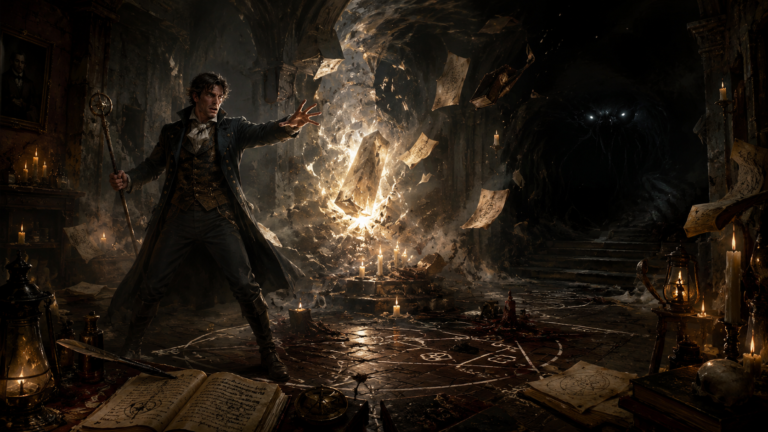
The magician should actually have to do magic.
The Magician Has to Actually Do Magic
One of the basic questions behind Jack’s Cinematic d12 is: What would this look like on a movie screen? That question affects much more than magic. If a character fires a black-powder weapon, I don’t want to imagine that he simply selected “attack” and a number appeared. He has a weapon in his hands. It has to be loaded. He raises it, takes aim, pulls the trigger, and there is an explosion of smoke and noise as the shot goes downrange. Those actions are part of what makes playing that character interesting. If the character standing beside him is a magician, I don’t see why his actions should be reduced to pressing a supernatural button that fires off a spell.
This matters particularly because Gloria Nocturna was designed with cinematic play in mind. One of my ambitions for JCd12 is that a really good session should be capable of producing something that feels almost like an episode of a well made television miniseries. With A.I. movie-making in mind, maybe the players actually record and edit their sessions, or maybe turning the game session into a blockbuster movie isn’t a priority. Either way, thinking cinematically forces an important question upon the game: if somebody were watching this scene instead of looking at the character sheet, what would he actually see?
That question is behind the casting methods in Codex Arcanum. Speech 🗣️, gestures or movement 🤲, magical items 🪄, and prepared Ritual Spaces ⭕ aren’t there simply to give the player four more boxes to check. They provide the physical language of magic. What does this particular working look like? What does it sound like? What is the magician holding? Does he need to prepare somewhere appropriate before he can even attempt it?
That means two characters can approach supernatural action in ways that communicate who they are. One practitioner may raise a staff and loudly invoke supernatural authority. Another might trace deliberate signs through the air. Someone else may employ an 🗡athame, 📜sacred text, 🌿herbs, 🎶music, 📿talisman, or some other implement appropriate to his tradition. A martial practitioner might integrate supernatural action into disciplined movement of the body. The important thing is that magic becomes something the character performs.
That does not mean I want Gloria Nocturna to become a game about counting flower petals or other spell ingredients. There is a point at which detail stops contributing to the fiction and starts interfering with it. I don’t need a player stopping the scene to determine whether his character has exactly five petals, seven pinches of incense, three candles, and enough diamond dust left in a pouch. Unless some particular object is genuinely essential to a particular working, that kind of accounting isn’t what interests me. I want enough information to establish what is happening in the imagined world, not so much bookkeeping that we forget why the character was doing it in the first place.
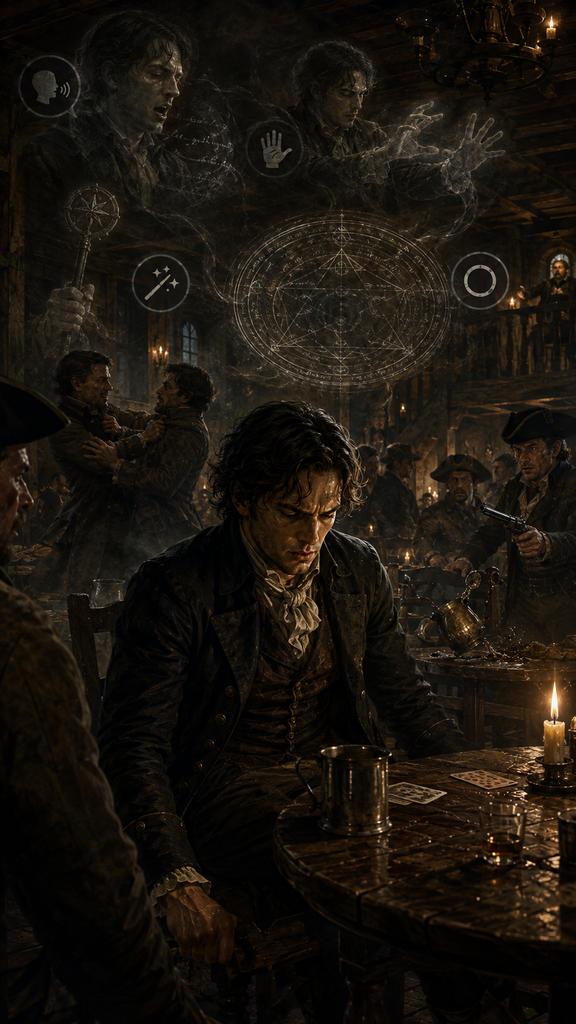
The casting methods therefore provide guidance rather than busywork. A player can look at the requirements of a Spell and begin imagining the scene immediately. Maybe his magician leaps onto a table, shouts the necessary words, sweeps his hand toward his enemy, raises his wand, and points. Now we have something another person at the table can picture. More importantly, we have something the player can build upon. The rules have given him the grammar of the action without writing his performance for him.
And the player himself doesn’t need to be an actor, occultist, poet, or expert in ceremonial magic. If the character is supposed to deliver an impressive invocation, the player can simply describe the character delivering one. JCd12 should encourage roleplaying without requiring somebody to possess the real-world talents his character possesses. We don’t require the player controlling the marksman to demonstrate that he can actually shoot a musket, so I’m certainly not going to require the person playing a magician to compose a convincing occult invocation on demand.
Where this gets particularly interesting to me is when a magician doesn’t perform a working in its customary way.
The casting methods describe the form through which the working is most naturally performed. But circumstances don’t always cooperate. Suppose a Spell is traditionally accompanied by speech and gestures. Under ordinary circumstances, that’s exactly how the magician would want to cast it. Now put him in a library with armed men. If he begins chanting and waving his hands around, everyone is going to know something is happening.
The player has a decision to make.
He could perform the working normally and risk discovery. Or he could say, “^#%$ it! I’m doing this with my mind alone.”
The game doesn’t forbid that. It makes it harder.
That distinction is important. Casting through mind alone isn’t an optimized version of the Spell that clever players will inevitably discover and then use every time. The recognizable forms of magic help the practitioner impose supernatural intent upon reality. Strip those things away and the magician is attempting to accomplish the same working through concentration alone, against greater resistance. Mechanically, he has deliberately made his situation worse.
But dramatically, he may have made the scene considerably better.
I love that kind of decision because it is very much what Jack’s Cinematic d12 is trying to encourage. In many games, players are trained to search for the mechanically optimal choice. Here, a player might knowingly accept a penalty because he thinks, No, this is how my character would do this right now. This is what makes sense in this scene. Maybe stealth demands it. Maybe pride demands it. Maybe the magician wants to stare directly into somebody’s eyes and produce an effect without apparently moving a muscle because that’s just cool.
The system can say: yes, you can try that.
Now make the roll.
⭕Ritual Spaces extend the same philosophy beyond the magician’s body and into the world itself. I wanted characters to care about places where magic has been performed. Discovering an old ritual chamber should potentially mean something. Perhaps it can be cleaned and restored. Perhaps a sacred space belonging to one tradition can be transformed for another purpose. Perhaps a neglected location still retains something useful about its construction or history. Preparing the right place for a working can itself become part of the adventure.
Again, the purpose isn’t to turn ritual into interior decorating or inventory management. I care much more about the fact that the characters spent time cleansing an abandoned ritual site than whether somebody remembered to write down the precise number of candles they brought. The location has become part of the story. A room that otherwise would have been another chamber on a map now has history, purpose, and potentially strategic value because somebody knows what can be done there.
The same philosophy applies to learning magic. One of the things I didn’t want was for a character to gain a level and suddenly have supernatural knowledge appear in his brain because the rules say he has unlocked three new Spells. That may be convenient mechanically, but what the hell did that look like in the story? Did the character wake up Tuesday morning knowing things he didn’t know Monday night?
I would rather turn advancement into an opportunity for a scene.
A Spell Learning Opportunity might be the magician finding an old book and discovering a passage that finally makes something comprehensible. Maybe his teacher explained the principle years ago, but he never really understood what the old bastard was trying to tell him. Then he encounters a paragraph in a grimoire, witnesses somebody else perform a related working, or experiences something himself, and suddenly the pieces connect. Oh. That’s what he meant.
Or perhaps the character learns through prayer, revelation, a dream, an inscription, a supernatural encounter, observation of another practitioner, or something that happens in the middle of an adventure. The exact opportunity depends upon the character and his magical tradition. What matters is that learning the Spell happened to the character. It becomes part of his biography.
That gives the Game Master something valuable as well. Magical advancement becomes another storytelling tool. A strange manuscript isn’t merely treasure worth fifty silver pieces. It might contain something a player has been searching for. A teacher can become important because of what she knows. An expedition can matter because of what somebody might discover there. Knowledge itself becomes treasure.
And then there is failure.
If magic is supposed to remain miraculous, I don’t think magicians should always look dignified while doing it. Sometimes magical failure ought to be frightening. A practitioner attempts something far beyond his ability, pushes himself too hard, suffers 🧠Mental Drain, becomes disoriented, collapses, or simply faints because he tried to force more through himself than he could handle.
Other times failure should be hilarious.
Imagine the magician has spent the last thirty seconds telling everyone exactly how powerful he is. He climbs onto the table. His coat sweeps behind him. He raises his staff. He performs an elaborate gesture. He bellows an invocation with absolute confidence.
Nothing happens.
Everyone looks at him.
That is also a magical scene.
Comedy and embarrassment matter because they make successful magic more meaningful. If the magician can fail—if circumstances can be wrong, if he can overreach, if reality can refuse to cooperate—then the moment when everything falls into place carries weight. Success isn’t merely the expected result of pressing the Spell button.
This is where an old metaphor from Anton LaVey stuck with me. He compared successful magic to working a combination lock. I always liked the basic image. You are trying to get the tumblers into the right positions. The person matters. The method matters. The circumstances matter. The moment matters. Maybe everything lines up and the lock opens. Maybe it doesn’t.
That is much closer to what I wanted a magician in Gloria Nocturna to experience. He isn’t carrying a collection of supernatural guns that reliably fire whenever he pulls their triggers. He knows ways of attempting the impossible. He has learned methods that make the impossible more likely. He can prepare himself, choose his circumstances, use the proper forms, and decide how hard he is willing to push.
Sometimes reality gives.
Sometimes it doesn’t.
And sometimes the magician pushes so hard that reality gives—and something on the other side notices.
When Reality Notices You
That last possibility is essential to the way I wanted powerful magic to feel in Gloria Nocturna. A Supreme Miracle should not feel like the magician has simply unlocked the largest version of an ability. It should feel dangerous. You have done some crazy shit with reality. You have produced something so extraordinary that ordinary explanations can no longer comfortably contain it, and there should be a moment when the player wonders whether doing that was actually a good idea.
That is particularly important at Power 3. At the lower end of a Spell’s Power Level, reality still has room to accommodate what happened. A Coincidental manifestation can hide inside luck, intuition, adrenaline, natural recovery, suggestion, or some other plausible explanation. As the magician pushes upward, he progressively removes those explanations. By the time he reaches Supreme Power, he is no longer asking reality for a convenient coincidence. He is demanding an unmistakable exception.
Power on that scale comes with consequences.
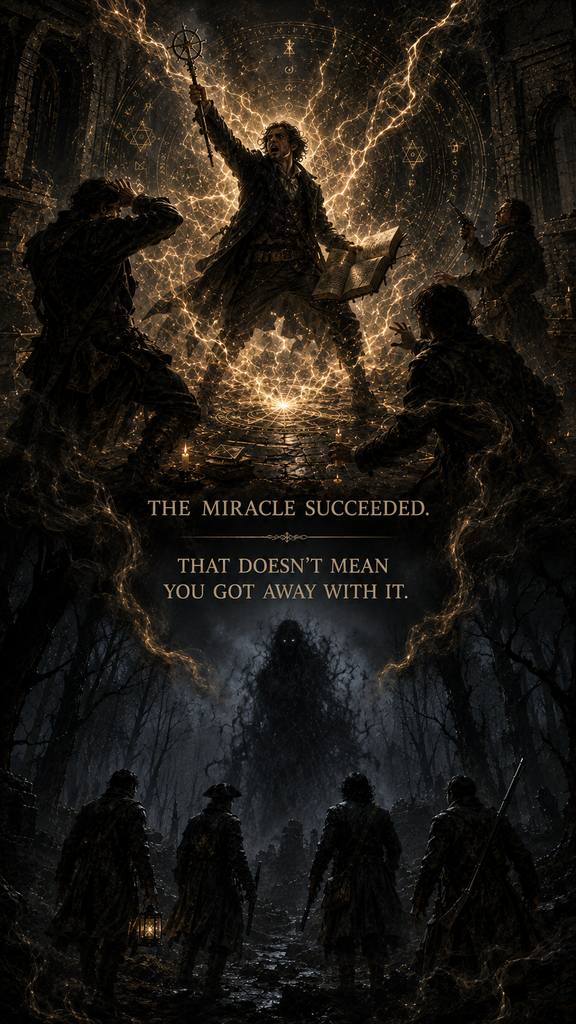
One of those consequences is Mental Drain. I had already encountered a version of this general idea in Shadowrun, whose treatment of magical Drain was one of the things I liked about its approach to spellcasting. I find the concept much more compelling than treating magical power entirely as ammunition. I don’t want the magician to have twenty-three abstract magic points, spend seventeen of them, and then think, Well, I guess I’ve got six magic points left. I want the consequence to belong to the person attempting the Miracle.
In Codex Arcanum, supernatural exertion can therefore take a mental and spiritual toll upon the practitioner. The more aggressively somebody pushes against ordinary reality, the greater the danger becomes. A magician can reach beyond what he can comfortably handle. He can become exhausted or disoriented. If he pushes far enough, he can collapse. This makes magical restraint meaningful because the question isn’t simply whether the character technically possesses an unused resource. The question is whether he is willing to put himself through what another serious working may require.
That creates a very different decision at the table. The player may know that his magician can attempt something extraordinary. That doesn’t mean he should.
And Supreme magic introduces another problem entirely: the Gloom may notice.
🪱The Gloom, or Arafel, isn’t simply a mana source or a convenient explanation for why monsters exist. It is part of the supernatural ecology of Gloria Nocturna. When somebody performs an extraordinary Miracle, particularly one that violently disturbs Consensus Reality, that disturbance can attract attention. At the highest levels of supernatural action, the magician isn’t merely gambling with whether the Spell succeeds. He may be creating what I think of as a kind of supernatural aggro.
The frightening part is that the player doesn’t necessarily know whether he generated it.
Imagine a group is in serious trouble. The magician decides there is no clever solution left and performs a Supreme working. It succeeds. Reality bends. Something absolutely impossible happens. The immediate threat is overcome, everybody survives, and the players finish the mission feeling like badasses.
Nothing attacks them.
They go home.
The next adventure begins.
Three days later they’re pursuing an entirely unrelated objective when something appears that is far beyond what they expected to encounter. Maybe at first they don’t even understand why it is there. Then the realization begins to set in.
This isn’t here because of what we’re doing tonight.
This thing is here because of what I did three days ago.
That is the kind of consequence I want powerful magic to create. The cost of the Miracle isn’t necessarily paid immediately, and the game doesn’t always announce that a bill is coming. The Game Master now has a piece of unresolved narrative tension that can be carried forward into another scene, another mission, perhaps even another session.
In that sense, powerful magic can create future story.
That matters because I don’t want supernatural consequences to function purely as punishment. If the system simply said, “You cast the big Spell, therefore take ten points of mental damage,” players would eventually reduce the whole thing to arithmetic. Can I survive ten points? Yes? Then cast it. Once the cost becomes uncertain, delayed, and capable of taking narrative form, the decision changes. You aren’t merely calculating how many resources you have left. You’re deciding how badly you need this Miracle and how much uncertainty you’re willing to introduce into the future.
I want a player contemplating Supreme magic to feel some version of: We really need this. But do we need it badly enough?
Of course, this raises a larger question about magical power itself. If magic is difficult, mentally exhausting, circumstantially sensitive, and potentially capable of attracting horrible things, why would anyone dedicate his life to becoming a magician in the first place?
For the same reason people dedicate their lives to acquiring any difficult form of knowledge or power: because being able to do something that other people cannot do can matter enormously.
Someone might pursue magic because he wants power. I don’t automatically consider that an evil motivation. People sometimes repeat the saying that power corrupts and absolute power corrupts absolutely as though wanting power is itself evidence of moral failure. Taken literally, that produces some pretty strange conclusions about any conception of an omnipotent God. Power is the capacity to act. The more interesting moral question is: what you do you want the power for?
A person might want supernatural power because he wants to protect his family. Another might want to heal strangers. Someone might believe he has a religious obligation to confront evil. Someone else wants knowledge for its own sake. Another wants prestige. Another wants revenge. Another wants domination. Another simply discovered that reality contains mysteries most people never see and cannot imagine spending the rest of his life pretending he isn’t fascinated by them.
Those motivations tell us considerably more about a character than the word magician does.
This also matters because Gloria Nocturna allows players to explore darker supernatural paths without treating evil as merely a color on an alignment chart. I want people to be able to tell stories about characters who desire forbidden power, make terrible compromises, rationalize their decisions, and gradually discover what those decisions actually cost. But I don’t want the game to reward destructive behavior simply because somebody wrote “evil” on his character sheet, nor do I want playing a morally dark character to mean that the player is expected to sabotage his friends at the table.
Power should create temptation because power can genuinely accomplish things.
Consequences are what make that temptation interesting.
The same philosophy is why I don’t want every magician to develop along an identical track. In Codex Arcanum, several questions that games sometimes collapse together remain separate. How much supernatural power can this character handle? What kinds of magic can he potentially access? And what has he actually learned? Those are not the same thing.
A character can devote himself heavily to magical study and accumulate an impressive repertoire. Another practitioner at the same general level of experience might know less magic because he has invested himself elsewhere. Maybe he is also an excellent marksman. Maybe he is a soldier, investigator, performer, martial artist, or something else entirely. The purpose isn’t to encourage players to discover some absurd multiclass combination or squeeze another +1 out of a character build. It is to allow two people who both qualify as magicians to have completely different lives.
Their supernatural traditions should also affect what being a magician means. A holy practitioner, a nature-oriented magician, a psychic, a martial adept manipulating chi, and a sorcerer reaching toward darker supernatural powers should not feel like five cosmetic skins wrapped around the same collection of abilities. Their relationships with the supernatural are different. Their methods are different. Their values may be different. What they believe they are doing may be different.
That becomes particularly important with morally dangerous magic. If a character repeatedly reaches toward the Gloom because the Gloom offers power, I don’t want the rules to tell him that this is merely another equally valid damage type. He is making choices about what kinds of powers he is willing to engage with and what consequences he is willing to accept. That creates room to explore temptation without requiring the player himself to become an asshole toward everybody else at the table.
And all of this brings me back to something very simple: magic should remain capable of frightening the magician.
A novice should sometimes be frightened because he doesn’t know whether the working will succeed. An experienced practitioner should sometimes be frightened because he knows exactly how much it might cost. And somebody preparing a Supreme Miracle should occasionally have the disturbing realization that success itself may be the dangerous outcome.
That doesn’t diminish the fantasy of magical power. I think it makes the fantasy considerably stronger.
When Gandalf stands before the Balrog and declares that it will not pass, the scene isn’t powerful merely because Gandalf possesses an ability capable of affecting the creature. His words matter. His identity matters. His staff matters. His posture matters. The danger matters. Most importantly, the possibility that this confrontation may cost him something matters. We aren’t watching somebody select the correct magical ability from a menu. We are watching a magician confront something terrible and impose his will upon the moment.
That is much closer to what I want supernatural power to feel like in Gloria Nocturna.
The magician prepares. He learns. He studies the circumstances. He chooses how he will perform the working. He decides how far into the Gradient or Power Level he is willing to reach. He considers what reality might tolerate. Then, when the moment comes, he takes the risk and attempts something that should not be possible.
Sometimes he fails.
Sometimes he succeeds.
And sometimes he succeeds so spectacularly that he spends the next three days wondering what heard him do it.
I Want You to Feel Like a Magician
Ultimately, all of these mechanics exist for one reason: I want the player to feel like he is actually playing a magician. I don’t want magic to exist primarily as a list of supernatural buttons on a character sheet. I want the player thinking about what his character knows, what he is attempting, how he is going to perform it, whether the circumstances are right, how far he is willing to push the Miracle, and what might happen if he succeeds.
That is part of the larger philosophy behind Jack’s Cinematic d12. Consider the difference between saying, “I attack with my musket,” and actually imagining the scene. The character loads the weapon. He brings it to his shoulder. He takes aim. He pulls the trigger. Black powder explodes, smoke fills the air, and the ball tears toward its target. Those actions are not unnecessary details standing between the player and the attack. They are part of the fantasy of being the person holding that weapon.
The magician deserves the same treatment.
One of the reasons a character like Gandalf feels like a magician isn’t merely that supernatural things happen around him. Think about his confrontation with the Balrog. His words matter. His movements matter. His staff matters. His authority matters. His appearance and identity matter. The danger matters. Everything about the scene tells us that this is not merely a man activating an ability. This is a magician standing against something terrible and doing real magic.
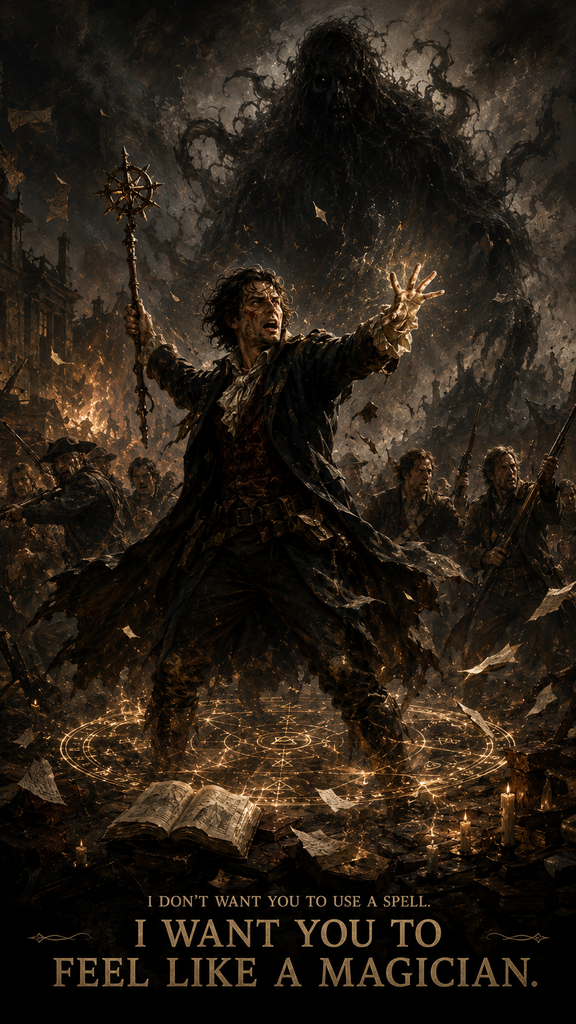
That is the experience I want Codex Arcanum to help create at the table. Sometimes the magician whispers. Sometimes he shouts. Sometimes he needs an implement, a gesture, a sacred place, or time to prepare. Sometimes circumstances force him to abandon all of that and attempt the working through sheer concentration. Sometimes he reaches for a subtle Miracle that nobody else will even recognize as magic. Sometimes he decides that subtlety isn’t going to save anybody and does something so impossible that everyone who witnesses it knows reality has just been violated.
And sometimes nothing happens, and he looks like an idiot.
All of those moments belong to the fantasy.
If the system works the way I intend it to, players shouldn’t remember magic primarily as bonuses, difficulty numbers, Power ratings, or mechanical resources. They should remember the time the magician found the missing piece of knowledge in an old book. They should remember preparing the ritual chamber. They should remember desperately attempting a working without speaking because enemies were likely listening on the other side of the door. They should remember the Miracle that everyone else dismissed as coincidence. They should remember the Supreme working that saved the entire group—and the horrible realization ten-hours later that something from the Gloom had noticed.
Those are stories.
So when somebody finishes playing Gloria Nocturna, I don’t merely want him to say, “My character had some cool Spells.”
I want him to sit back and think:
“Holy @^#*. I actually felt like I was playing a magician.”
If Codex Arcanum can accomplish that, then the magic system has done exactly what I designed it to do.
Purchase a digital copy of the 420-page Codex Arcanum, containing 218 spells expressed through 868 unique manifestations across 24 schools of magic.
About the Author